Fastest
Eureka on the web
When you want the answer in the next five minutes.
The agent works the prompt against patents and technical literature, citing every source.
Run your analysis now →Surface code error correction hardware sits at the intersection of qubit-grid engineering and classical control logic: the syndrome-extraction cycles, decoder latency budgets and real-time feedback paths that turn noisy physical qubits into a usable logical qubit. This dataset tracks 17 published records filed or published between 2015 and 2026 whose title or claims name surface code error detection, quantum error correction thresholds, or logical qubit demonstrations, and whose claims or description reference syndrome extraction, decoder latency, real-time feedback, correlated error handling, leakage handling or scaling.
The scope is deliberately narrow: it is not general quantum computing hardware, but the specific control and correction layer that sits between a physical qubit array and a fault-tolerant logical qubit. That narrowness is visible in the assignee list and the classification spread below, both of which point to a field still concentrated around one early mover.
Two views of the same 17 records: how filing activity moved year over year, and which IPC subclasses the claims actually sit in.
Filings ran at 9 in 2017, the peak so far, then fell toward the 2022 midpoint where the trend records 0. A small recent uptick follows, but because publication typically lags filing by around 18 months, the most recent year or two in this trend understates actual filing activity and should not be read as the field cooling for good.
All 17 records in scope carry a G06N classification (computing arrangements based on specific computational models), making it the near-universal tag for this search. H03K (pulse technique and logic circuits) appears on 9 records, 52.9% of the 17, reflecting the real-time feedback and decoder-timing claims at the hardware-control layer. H10N (other electric solid-state devices) appears on just 1 record, 5.9% of the 17 — a thin footprint given how central physical qubit fabrication is to the field.
Shares are the percentage of the 17 records in scope. A patent can carry several IPC classes, so the shares add up to more than 100%.
This page is one run against one query. Ask Eureka your own question about surface code error correction hardware and every answer comes back with the patent numbers behind it.
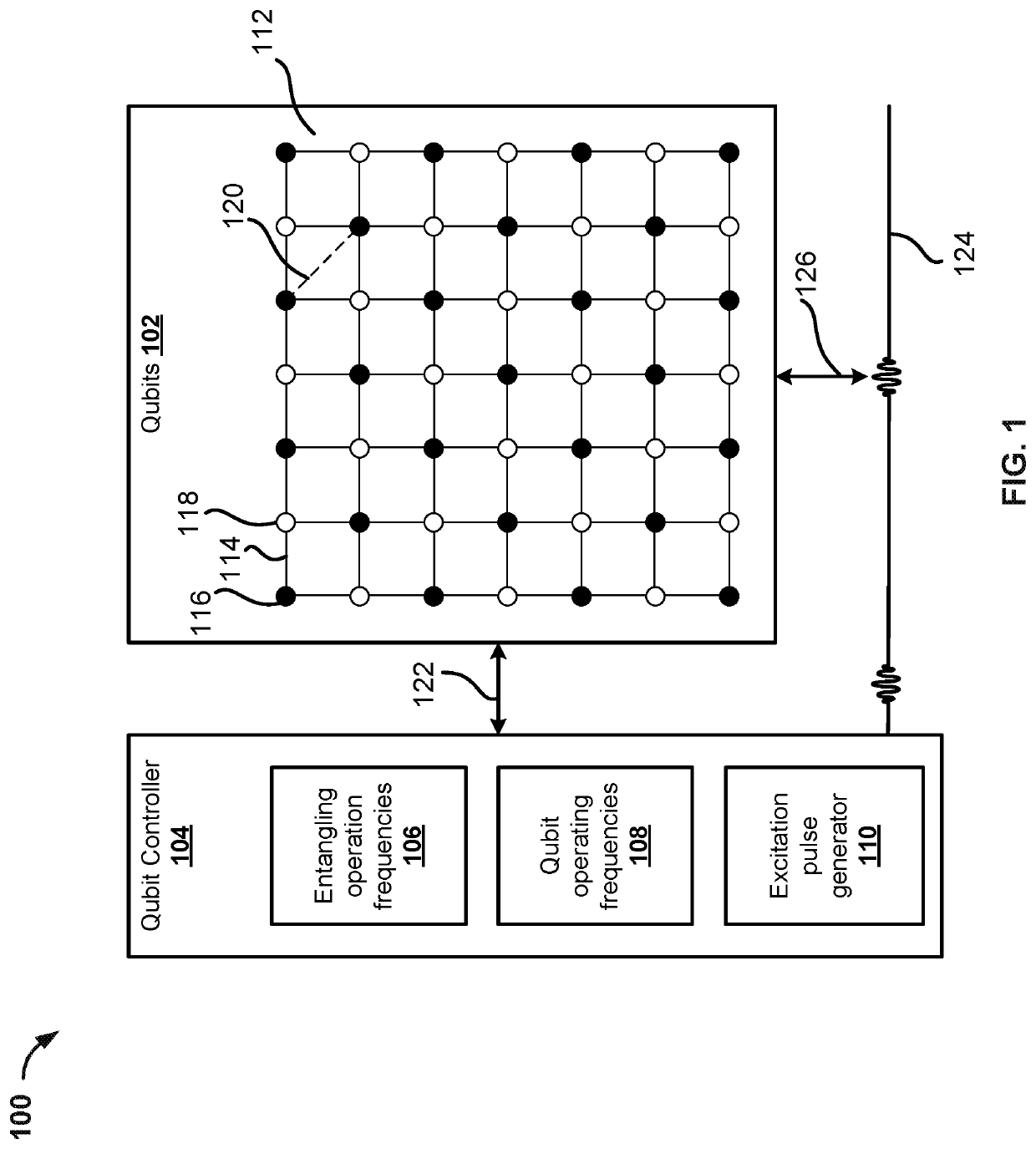
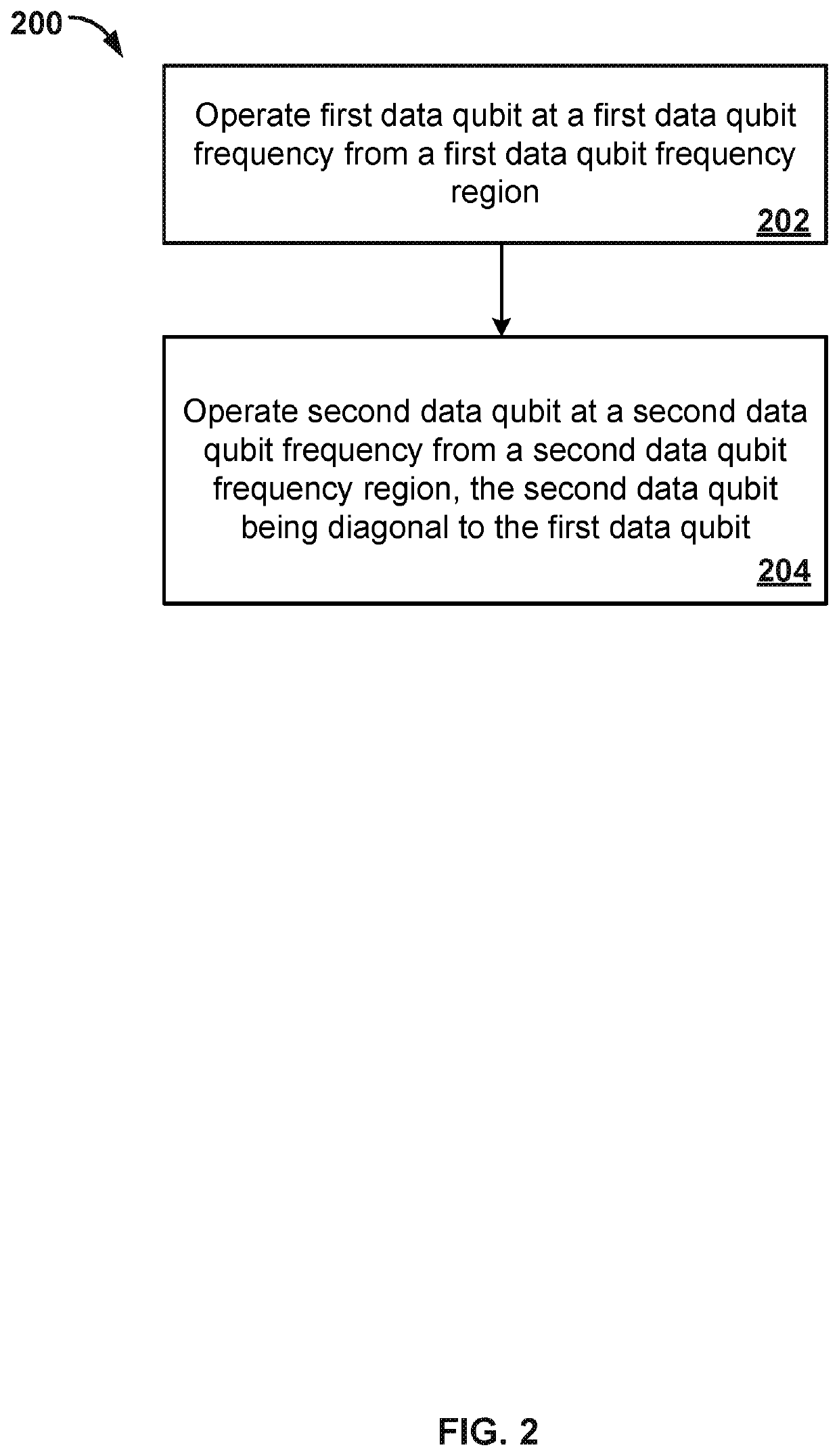
Try EurekaMethods and systems for performing a surface code error detection cycle. In one aspect, a method includes initializing and applying Hadamard gates to multiple measurement qubits; performing entangling operations on a first set of paired qubits, wherein each pair comprises a measurement qubit coupled to a neighboring data qubit in a first direction; performing entangling operations on a second set of paired qubits, wherein each pair comprises a measurement qubit coupled to a neighboring data qubit in a second or third direction, perpendicular to the first, with the second direction opposite the third.US20210035006A1 · Google LLC · published 2021-02-04
| # | Publication no. | Patent title | Citations |
|---|---|---|---|
| 1 | WO2019032103A1 | Reducing parasitic interactions in a qubit grid for surface code error correction | 14 |
| 2 | US20210035006A1 | Reducing parasitic interactions in a qubit grid for surface code error correction | 11 |
| 3 | US11562280B2 | Reducing parasitic interactions in a qubit grid for surface code error correction | 10 |
| 4 | US20240378473A1 | Reducing parasitic interactions in a qubit grid for surface code error correction | 2 |
| 5 | US12056575B2 | Reducing parasitic interactions in a qubit grid for surface code error correction | 2 |
| 6 | US12536463B2 | Reducing parasitic interactions in a qubit grid for surface code error correction | 1 |
| 7 | US20240062086A1 | Reducing parasitic interactions in a qubit grid for surface code error correction | 1 |
| 8 | US11763186B2 | Reducing parasitic interactions in a qubit grid for surface code error correction | 1 |
Citation counts inside a searched corpus favour older filings — treat these as a signal of influence on later filers, not a ranking of current technical importance.
Publication numbers are shown where the record carries one (8 of 8 rows); clicking a row searches Eureka by that number.
When you want the answer in the next five minutes.
The agent works the prompt against patents and technical literature, citing every source.
Run your analysis now →When it has to run inside your own pipeline.
Patent search, landscape analysis and assignee resolution as MCP tools. Drop them into any agent framework, or call REST directly.
Browse MCP servers →Three findings that shape where a new application would actually land relative to existing claims.
The leading assignee accounts for 16 records against a fifth-place count of 1 across the seven ranked companies. New filings in the qubit-grid parasitic-interaction space should assume Google's published claims as the prior art to design around first.
Filing activity peaked at 9 in 2017 and fell to 0 by the 2022 midpoint. A small recent tick is visible, but with publication lagging filing by roughly 18 months, the last one to two years understate real activity rather than showing a field in decline.
Every record in scope carries a G06N tag, with H03K pulse-and-logic-circuit claims on just over half. H10N solid-state device claims — the physical qubit fabrication layer — appear on only 1 record, a narrow footprint relative to how central fabrication is to scaling error correction hardware.
Eureka can read the same corpus for gaps instead of for coverage: under-claimed branches adjacent to surface code error correction hardware, with the prior art for and against each one.
The ranked set is short — seven companies — and dominated by one filer, with a cluster of individually-named applicants each holding a single co-filed record.
Google holds the large majority of records in this ranking, including the most-cited documents in the set, all centred on reducing parasitic interactions in a qubit grid during surface code error detection cycles.
Below the leader, the ranking drops to single-digit and single-record counts held by individually named applicants who appear together across 10 co-assignee pairs, suggesting small collaborative filing groups rather than competing corporate labs.
Four of the six assignees with recent-year momentum data show a full year-over-year drop to zero filings, while the leader still recorded 1 filing in the latest year — a gap that widens the leader's relative position even as overall volume stays low.
| Assignee | Recent year | YoY |
|---|---|---|
| Google LLC | 1 | — |
| MR SATHISH KRISHNA ANUMULA | 0 | -100% |
| DR Y SARITHA KUMARI | 0 | -100% |
| DR V P GEETHA VANI | 0 | -100% |
| DR SAMUEL TALARI | 0 | -100% |
| DR R NITHYA | 0 | -100% |
| DR C C SANGEETHA | 0 | -100% |
The published record set is small and concentrated — the next step is usually a claim-level read of the leading filer's family, followed by a check of the thinner classification branches.
Start with the most-cited records tied to the qubit-grid parasitic-interaction work and map exactly which method steps and hardware arrangements are claimed versus merely described.
Open the family in EurekaWith only 1 of 17 records tagged to solid-state device claims, a fabrication-focused filing may face less occupied claim space than a control-logic filing would.
Explore IPC H10N records in EurekaIn this dataset, Google LLC holds 16 of the records in a ranked set of seven companies, making it the dominant filer by a wide margin. The next closest assignee in the ranking holds just 1 record. This concentration means most of the citable prior art in qubit-grid error correction and parasitic-interaction reduction traces back to a single applicant, so any new filing in that specific area should be benchmarked against Google's published claims first.
The filing trend peaked at 9 records in 2017 and fell to 0 by the 2022 midpoint, with a small uptick visible more recently. Because patent publication typically lags the actual filing date by around 18 months, the last one to two years in any trend chart will always look lower than the true filing rate turns out to be. Read the recent dip as incomplete data rather than confirmed decline.
US20210035006A1, assigned to Google LLC and published 2021-02-04, covers methods for running a surface code error detection cycle: initializing measurement qubits with Hadamard gates, then performing entangling operations across paired measurement and data qubits in specific perpendicular directions. It is one of a related family of documents (also including WO2019032103A1 and US11562280B2) sharing the title 'Reducing parasitic interactions in a qubit grid for surface code error correction', and it is the most-cited record in this landscape, with 11 citations recorded.
Classification data shows all 17 records in scope carry a G06N tag, but only 1 record carries an H10N tag covering other electric solid-state devices — the physical fabrication layer for qubit hardware. Leakage handling, correlated-error mitigation and decoder-latency budgeting also appear in the search scope but are not broken out as separately dominant classes, suggesting these functional areas are described within broader filings rather than claimed as distinct inventions. That gap is where a narrowly drafted first claim is more likely to clear prior art.
The ranked assignee list contains only seven companies total, which is the complete set the data endpoint returns for this search — it is not a top-50 or top-100 filtered list. Within that small set, one company holds 16 records while the fifth-ranked entry holds just 1, so the shape is a single dominant filer plus a short tail of individually named co-filers linked through 10 recorded co-assignee pairs. A precise concentration percentage cannot be computed from the ranking against the 17-record total because the two figures are not directly comparable units.
Go past this page: query the whole surface code error correction hardware corpus yourself, in your own scope.
Every answer comes back with patent numbers you can open.
Disclaimer. This page is generated from Patsnap Eureka data drawn from a limited snapshot of global patent and scientific-literature records, and is provided for general information and reference only.
Patent data carries inherent limitations: recent filings (typically the most recent 18–24 months) are under-counted due to standard publication lag; counts may be reported at either a patent-family or a patent-record basis and are not always directly comparable; classification, applicant-name, and citation data may contain errors, duplicates, or omissions; and the underlying search query defines and constrains the scope shown. As a result, the analysis may be incomplete or inaccurate and may not reflect the full technology landscape.
Nothing on this page constitutes an exhaustive prior-art, novelty, freedom-to-operate, or validity search, nor does it constitute legal, financial, investment, or professional advice, and it should not be relied upon as such. Any patent, commercial, or strategic decision should be verified independently and reviewed with qualified patent, legal, and domain professionals. Patsnap makes no warranties, express or implied, as to the accuracy, completeness, or fitness for any particular purpose of the information presented.
Machine translation. Assignee and organisation names originally recorded in Chinese, Japanese or Korean have been rendered into English by an AI translation step so that the tables stay readable. These renderings are best-effort and may not match a company's registered English name; the original name is what the underlying patent record carries, and it is what any Eureka query launched from this page uses.
Help us improve
Something wrong, out of date, or missing on this page? Tell us and it goes straight to the team that maintains it.
This page