Fastest
Eureka on the web
When you want the answer in the next five minutes.
The agent works the prompt against patents and technical literature, citing every source.
Run your analysis now →Edge-cloud collaborative computing patents in this dataset cover computation offloading between mobile or edge devices and cloud or edge servers, with claims built around latency-energy tradeoffs, task partitioning, network variability and orchestration. The search spans G06F9, H04L67 and H04W28 classifications, capturing both the systems-level data-processing side and the transport and wireless-network side of the problem. Publication naturally lags filing by roughly 18 months, so the most recent year in any trend line understates actual filing activity.
The corpus is small — 12 patent families — which makes it a field still forming its claim map rather than one already carved up. That combination of a dominant cited-prior-art family and a long tail of single-filing entrants is the central story of this page.
Pick a task. Every answer cites the patents behind it.
Two views of the same 12-family dataset: how filing has moved year over year, and which IPC subclasses the claims actually sit in.
Filings moved from 2 in 2017 to a peak of 3 in 2023, with the 2022 midpoint sitting at just 1 family. That shape — low, flat, then a step up — points to a field that only recently attracted sustained attention, not one in decline; the 2026 figure of 2 is a partial year and will rise as later publications land.
G06F (11 records), H04L (10) and H04W (10) are all near-universal across the set, meaning most families claim across data processing, network transmission and wireless architecture together rather than isolating one layer. G06N (AI-based computing) appears in only 1 record, which is a useful marker: AI-driven offloading decision logic is present but not yet a crowded claim area here.
Shares are the percentage of the 12 records in scope. A patent can carry several IPC classes, so the shares add up to more than 100%.
This page is one run against one query. Ask Eureka your own question about edge-cloud collaborative computing and every answer comes back with the patent numbers behind it.
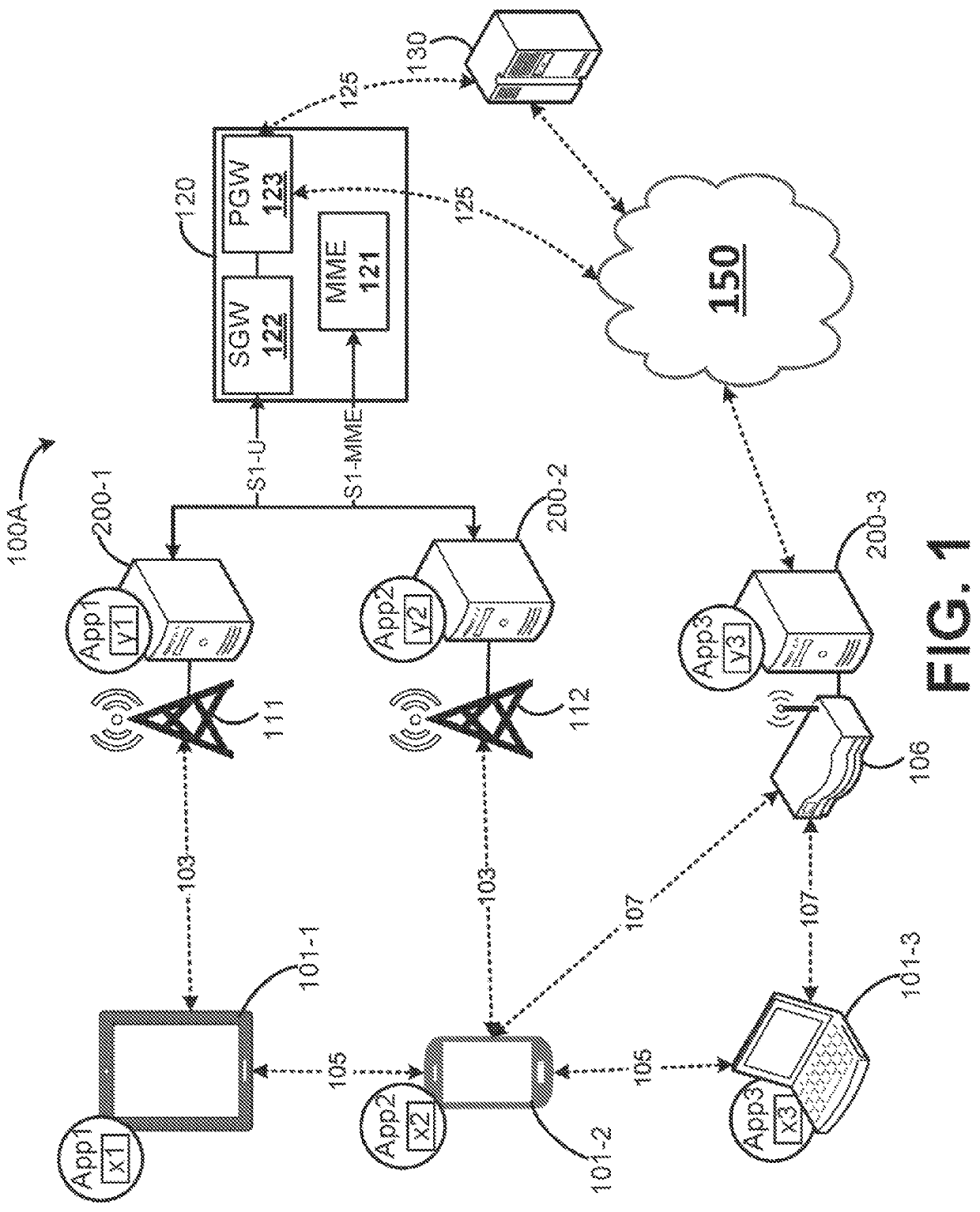
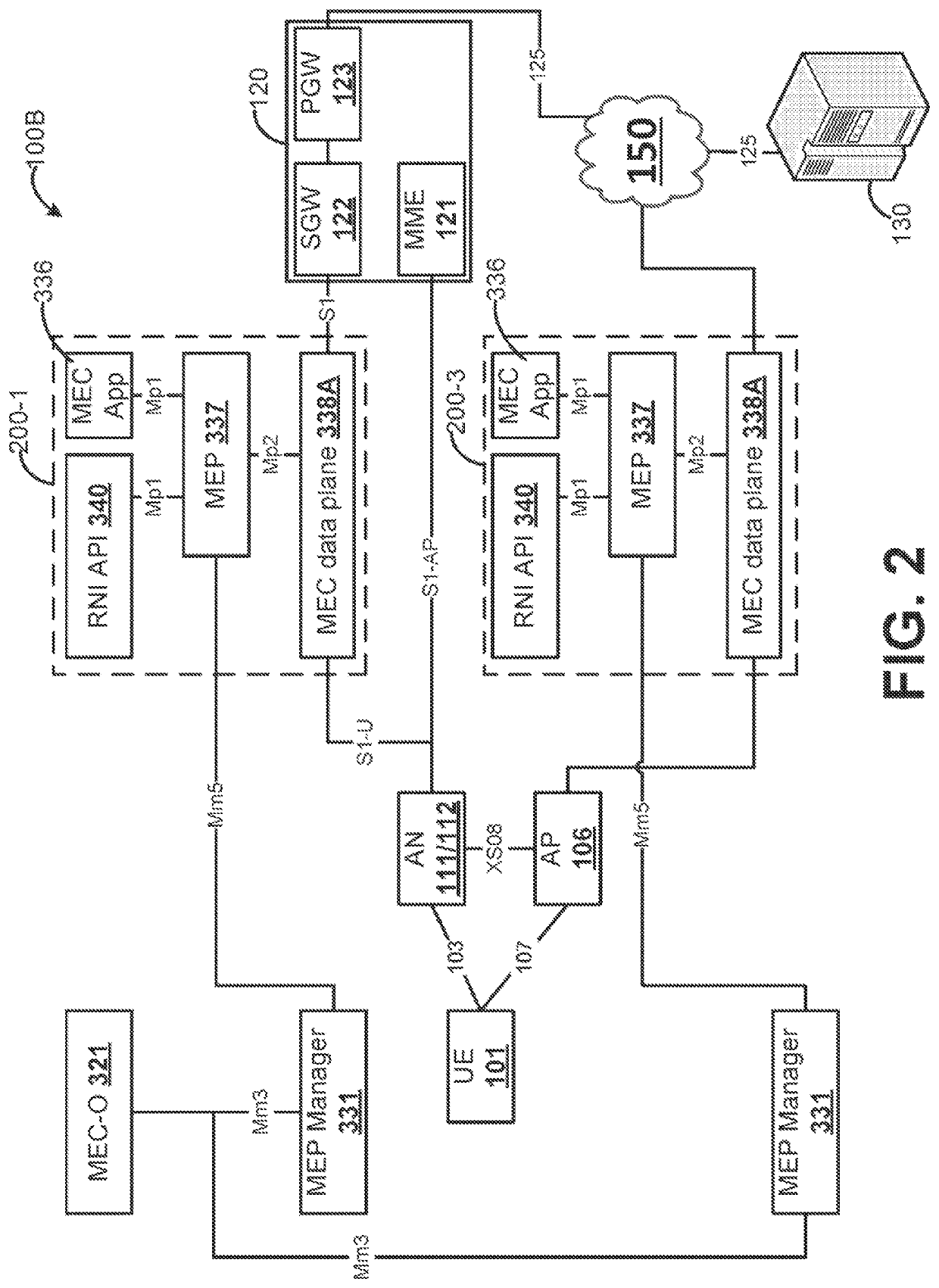
Try EurekaSystems, apparatuses, methods, and computer-readable media, are provided for offloading computationally intensive tasks from one computer device to another computer device taking into account, inter alia, energy consumption and latency budgets for both computation and communication. Embodiments may also exploit multiple radio access technologies (RATs) in order to find opportunities to offload computational tasks by taking into account, for example, network/RAT functionalities, processing, offloading coding/encoding mechanisms, and/or differentiating traffic between different RATs.Filed by Intel Corporation, granted 2023-07-04. It sits in the same titled family as the four other most-cited records in this set, several of which carry far higher citation counts, indicating this is a continuation lineage rather than an isolated filing.
| # | Publication no. | Patent title | Citations |
|---|---|---|---|
| 1 | US20180183855A1 | Application computation offloading for mobile edge computing | 496 |
| 2 | US10440096B2 | Application computation offloading for mobile edge computing | 80 |
| 3 | US20200076875A1 | Application computation offloading for mobile edge computing | 51 |
| 4 | US11050813B2 | Application computation offloading for mobile edge computing | 21 |
| 5 | US20220078226A1 | Application computation offloading for mobile edge computing | 9 |
| 6 | US11695821B2 | Application computation offloading for mobile edge computing | 9 |
| 7 | US20240015203A1 | Application computation offloading for mobile edge computing | 3 |
| 8 | WO2023018778A1 | Radio access network computing service support with distributed units | 3 |
| 9 | US12200041B2 | Application computation offloading for mobile edge computing | 2 |
Citation counts favour older publications simply because they have had more time to accumulate citations within the searched corpus — read them as a signal of influence on subsequent filings, not as a measure of current commercial importance.
Publication numbers are shown where the record carries one (9 of 9 rows); clicking a row searches Eureka by that number.
When you want the answer in the next five minutes.
The agent works the prompt against patents and technical literature, citing every source.
Run your analysis now →When it has to run inside your own pipeline.
Patent search, landscape analysis and assignee resolution as MCP tools. Drop them into any agent framework, or call REST directly.
Browse MCP servers →Three things stand out once the trend, the classification split and the citation graph are read together.
The five most-cited records are all titled variants of the same Intel offloading family, with citation counts ranging from 9 to 496. Any new filing on device-to-device or mobile-to-edge offloading with RAT-aware scheduling will almost certainly need to be checked against this lineage first.
With filings moving from 2 in 2017 to a peak of 3 in 2023 and the 2022 midpoint at just 1, this reads as an early-stage claim map rather than a mature, contested one. There is still room to establish a defensible position before volume increases.
Recent-year momentum is split across six individual and institutional filers, each contributing exactly one filing. Co-assignee pairs among a subset of them suggest joint academic or student-team filings rather than a coordinated corporate strategy.
Eureka can read the same corpus for gaps instead of for coverage: under-claimed branches adjacent to edge-cloud collaborative computing, with the prior art for and against each one.
The assignee base splits between one large corporate holder with a deep citation lineage and a scattered set of individual or institutional filers each active in the most recent year.
Holds the representative filing in this dataset and the most heavily cited lineage of application computation offloading patents, spanning multiple publication stages of the same family from 2018 through 2023.
SATHYA R appears in the strongest co-assignee pairs in the dataset, filing alongside PRASHANTHI A, MEENA V and LAKSHMI B — a pattern consistent with a joint academic filing team rather than a single company building a portfolio.
The one named institutional assignee active in the most recent year, filing alongside the individual inventor-assignees rather than as part of a larger corporate program.
| Assignee | Recent year | YoY |
|---|---|---|
| SATHYA R | 1 | — |
| PRASHANTHI A | 1 | — |
| NOIDA INST OF ENG & TECH | 1 | — |
| MEENA V | 1 | — |
| LAKSHMI B | 1 | — |
| GUNASUNDARI B | 1 | — |
| CHANDRAKALA V | 1 | — |
| Intel Corporation | 0 | — |
This page surfaces the shape of the field. Turning it into a filing or freedom-to-operate decision means going deeper on the specific claims that matter to your work.
Before drafting around offloading, latency-energy tradeoffs or multi-RAT scheduling, map the independent claims of the cited Intel family stage by stage to see which elements are actually locked and which have narrowed on continuation.
Explore claims in EurekaThe co-assignee pairs among academic and institutional filers suggest an emerging research cluster worth monitoring for follow-on filings, particularly around data-locality and task-partitioning claims.
Set up monitoring in EurekaThis dataset contains 12 patent families published between 2017 and mid-2026, drawn from a search focused on computation offloading, task partitioning and orchestration under the G06F9, H04L67 and H04W28 classifications. That is a small corpus for a field this broadly named, which tells you the search terms are catching a specific technical slice rather than the whole edge-computing space. Broader searches on adjacent terms like network function virtualisation or general edge orchestration would likely surface additional related families outside this scope.
Intel Corporation holds the most-cited lineage in this dataset, with a family of application computation offloading patents that includes a record cited 496 times, alongside related publications cited 80, 51, 21 and 9 times respectively. These are all variants of the same titled invention progressing through publication and grant stages, which means the underlying claim territory has been under continuous refinement rather than being a single one-off filing. Any competitor targeting mobile-to-edge offloading with energy and latency budgeting should review this lineage first.
Filing activity is still accelerating based on the data available: annual filings moved from 2 in 2017 to a peak of 3 in 2023, with a low point of 1 at the 2022 midpoint. The 2026 figure of 2 looks lower only because publication typically lags filing by around 18 months, so recent filings have not fully surfaced yet. Taken together, the trend does not show a field that has peaked and is now declining.
AI-driven offloading decision logic, classified under G06N, appears in only 1 of the 12 records in this dataset, despite the other core classifications (G06F, H04L, H04W) each appearing in around 10 of the 12. That gap suggests claim space around machine-learning-based task scheduling or predictive offloading decisions is comparatively open. Multi-RAT-aware scheduling and data-locality-based partitioning also show thin representation relative to the breadth of the search string.
US11695821B2 covers offloading of computationally intensive tasks between devices with explicit consideration of energy consumption and latency budgets, including scenarios exploiting multiple radio access technologies. It does not block all offloading work outright, but new filers should check their claims against this family and its earlier-cited relatives, particularly if the invention touches RAT-aware scheduling or joint energy-latency budgeting. Claims narrower in scope, such as those focused purely on data locality or AI-driven decision models, are more likely to sit outside its coverage.
Go past this page: query the whole edge-cloud collaborative computing corpus yourself, in your own scope.
Every answer comes back with patent numbers you can open.
Disclaimer. This page is generated from Patsnap Eureka data drawn from a limited snapshot of global patent and scientific-literature records, and is provided for general information and reference only.
Patent data carries inherent limitations: recent filings (typically the most recent 18–24 months) are under-counted due to standard publication lag; counts may be reported at either a patent-family or a patent-record basis and are not always directly comparable; classification, applicant-name, and citation data may contain errors, duplicates, or omissions; and the underlying search query defines and constrains the scope shown. As a result, the analysis may be incomplete or inaccurate and may not reflect the full technology landscape.
Nothing on this page constitutes an exhaustive prior-art, novelty, freedom-to-operate, or validity search, nor does it constitute legal, financial, investment, or professional advice, and it should not be relied upon as such. Any patent, commercial, or strategic decision should be verified independently and reviewed with qualified patent, legal, and domain professionals. Patsnap makes no warranties, express or implied, as to the accuracy, completeness, or fitness for any particular purpose of the information presented.
Machine translation. Assignee and organisation names originally recorded in Chinese, Japanese or Korean have been rendered into English by an AI translation step so that the tables stay readable. These renderings are best-effort and may not match a company's registered English name; the original name is what the underlying patent record carries, and it is what any Eureka query launched from this page uses.
Help us improve
Something wrong, out of date, or missing on this page? Tell us and it goes straight to the team that maintains it.
This page