Fastest
Eureka on the web
When you want the answer in the next five minutes.
The agent works the prompt against patents and technical literature, citing every source.
Run your analysis now →Network Function Virtualization patenting sits at the intersection of telecom signalling and general-purpose compute — the search scope here pairs service chaining, orchestration, packet processing acceleration, performance isolation and lifecycle management claims against H04L41, G06F9 and H04L45 classifications. That combination captures both the network-specific control-plane work and the underlying virtualization infrastructure it depends on.
The dataset covers 1,097 published records filed between 2015 and 2026, with the most recent year necessarily undercounted because publication lags filing by roughly 18 months. Filing activity already shows a clear post-2018 decline, which is a maturity signal worth reading carefully rather than a sign the field is closing.
Two views of the same 1,097-record dataset: how filing volume moved year over year, and which IPC subclasses carry the claim density.
Annual filings ran from 132 in 2017 to a peak of 147 in 2018, then eased to 65 by the 2022 midpoint and down to 3 in 2026 — a partial year that will revise upward as later publications land.
H04L covers 84.3% of the 1,097 records and G06F covers 60.2%, confirming that most NFV filings combine network-layer transmission claims with general compute or orchestration claims. Wireless (H04W, 8.3%), business-process (G06Q, 1.4%) and AI-model (G06N, 1.3%) classes are present but marginal by comparison.
Shares are the percentage of the 1,097 records in scope. A patent can carry several IPC classes, so the shares add up to more than 100%.
This page is one run against one query. Ask Eureka your own question about network function virtualization and every answer comes back with the patent numbers behind it.
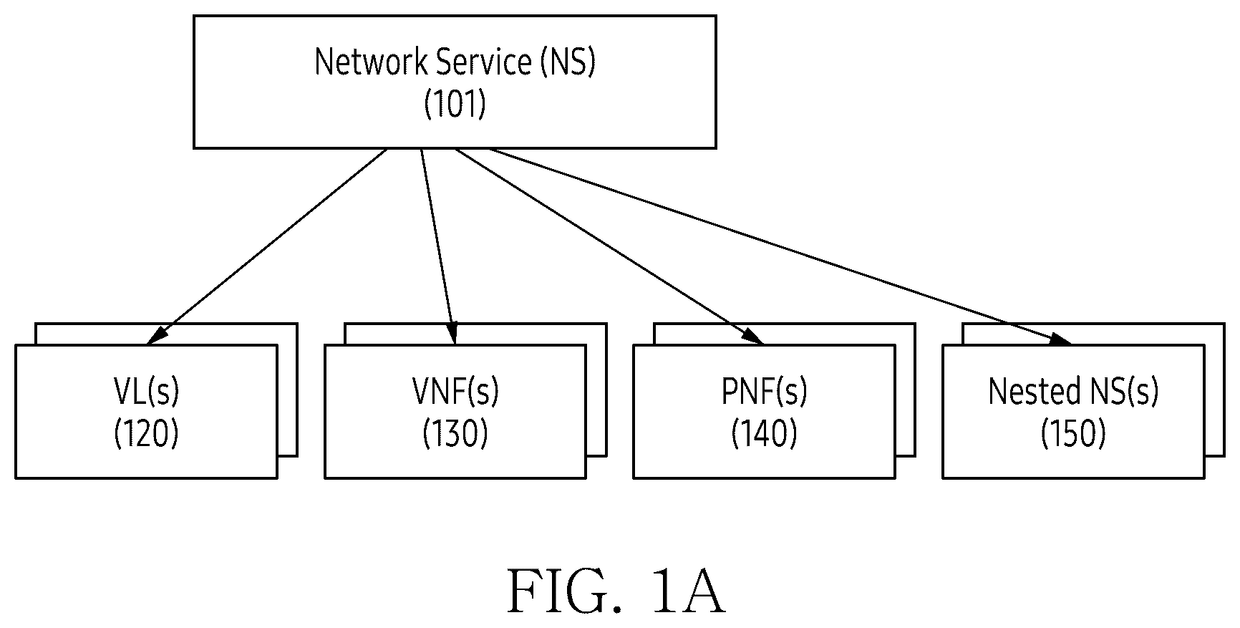
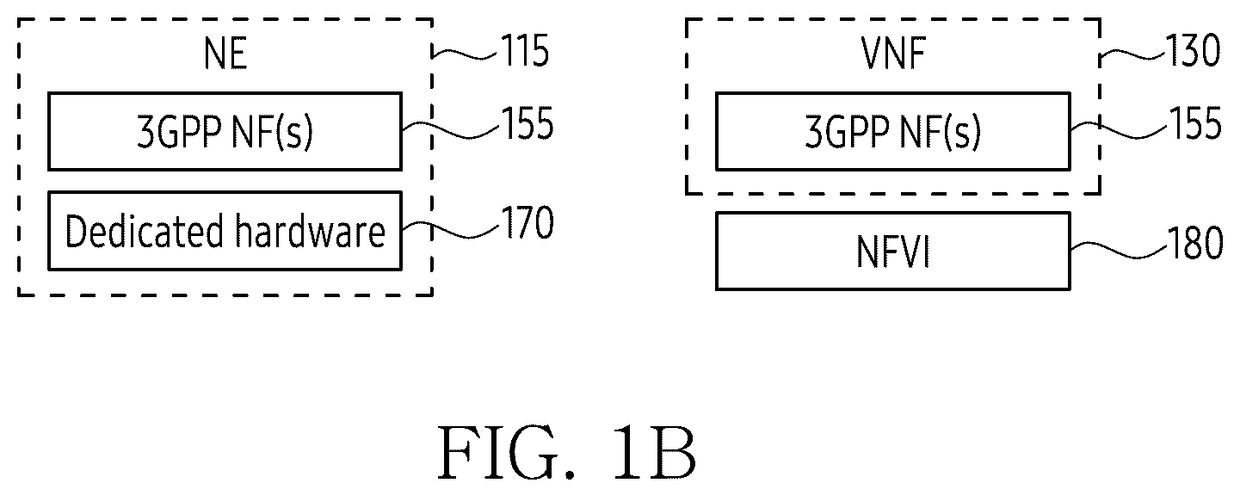
Try EurekaThe method covers a virtualized network function manager (VNFM) that transmits authentication information to an element management system (EMS) generated by another VNFM, uses that information to register in a subscription list, receives a subscription request from the EMS, performs instantiation of a network element based on that registration, and issues a lifecycle management change (LCM) notification once instantiation proceeds.Filed by Samsung Electronics, published 2025-12-04 — one of the most recent records in scope, illustrating that VNFM-to-EMS authentication and subscription handshakes remain an active claim area.
| # | Publication no. | Patent title | Citations |
|---|---|---|---|
| 1 | US20140201374A1 | Network Function Virtualization for a Network Device | 560 |
| 2 | US20140317261A1 | Defining interdependent virtualized network functions for service level orchestration | 543 |
| 3 | US20150063166A1 | System and Method for Mobile Network Function Virtualization | 453 |
| 4 | US20140317293A1 | App store portal providing point-and-click deployment of third-party virtualized network functions | 350 |
| 5 | US20200278892A1 | Remote smart NIC-based service acceleration | 305 |
| 6 | US10355989B1 | Virtual performance hub | 235 |
| 7 | US20160212017A1 | Systems and Methods for SDT to Interwork with NFV and SDN | 191 |
| 8 | US20150358248A1 | Controlling of virtualized network functions for usage in communication network | 169 |
| 9 | US20170177396A1 | Methods and apparatus for multi-stage VM virtual network function and virtual service function chain accelera… | 139 |
| 10 | US20170257276A1 | Network functions virtualization | 135 |
Citation counts reflect influence within this searched corpus and favour older filings; a low citation count on a recent record says nothing about its future weight.
Each row carries its publication number; clicking a row searches Eureka by that number.
When you want the answer in the next five minutes.
The agent works the prompt against patents and technical literature, citing every source.
Run your analysis now →When it has to run inside your own pipeline.
Patent search, landscape analysis and assignee resolution as MCP tools. Drop them into any agent framework, or call REST directly.
Browse MCP servers →Three read-outs from the concentration, trend and classification data that matter for a filing or freedom-to-operate decision.
Just five assignees account for 53.4% of all 1,097 records in scope, and the top ten extend that to 68.2%. New entrants filing broad service-chaining or lifecycle-management claims will land directly on ground the leaders already occupy.
Annual filings ran at 147 in the 2018 peak, sat at 65 by the 2022 midpoint, and were down to 3 by 2026 — though the latest year is a partial count understated by publication lag. The pattern points to a field where core architecture claims are largely staked, not one still in a filing race.
With 84.3% of records touching H04L and 60.2% touching G06F, most filings combine network transmission claims with general data-processing or orchestration claims rather than sitting in one classification alone. Smaller classes like G06N (AI models, 1.3%) show where compute-adjacent NFV claims are only beginning to appear.
Eureka can read the same corpus for gaps instead of for coverage: under-claimed branches adjacent to network function virtualization, with the prior art for and against each one.
The leader holds 293 records against a fifth-place figure of 47 and a tenth-place figure of 26 — a steep drop-off that marks a genuine leadership tier rather than a gradual taper. Recent-year momentum data shows the leading assignees, including Huawei, Ericsson, Nokia, ZTE, Intel and NEC, all recording zero filings in the latest year, consistent with the broader post-2018 decline rather than any single company pulling back.
The leading assignee holds 293 records, more than six times the fifth-place total of 47, indicating a company that treated NFV architecture as core intellectual property rather than a peripheral filing area.
Records fall from 47 at fifth place to 26 by tenth place, a sharper decline than the gap between first and fifth. Competitive pressure below the leadership tier is real but thinner than the headline concentration suggests.
Every major assignee tracked for recent-year momentum, including the top filer, shows zero recorded filings in the latest year. This lines up with the 2018 peak and subsequent decline rather than indicating any one company exiting the space.
| Assignee | Recent year | YoY |
|---|---|---|
| Huawei Technologies Co., Ltd. | 0 | -100% |
| Telefonaktiebolaget LM Ericsson | 0 | — |
| Nokia Solutions and Networks Oy | 0 | — |
| ZTE Corporation | 0 | — |
| Intel IP Corporation | 0 | — |
| NEC Corporation | 0 | — |
| Cisco Technology, Inc. | 0 | — |
| Jio Platforms Limited | 0 | — |
The dataset points to a field with staked core claims and a declining filing rate — the open questions now are about specific sub-areas and specific blocking claims.
With one assignee holding 293 of 1,097 records, any new filing in service chaining or lifecycle management should be checked against that portfolio first, not the field average.
Run a freedom-to-operate check →G06N and G06Q overlaps with NFV orchestration sit under 2% of records each — thin enough that a well-drafted claim could still stake meaningful ground.
Explore white space in Eureka →The assignee ranking in this dataset is led by a single company with 293 records out of 1,097 in scope, well ahead of the fifth-place assignee at 47. The leading filers include major telecom equipment vendors and chipmakers such as Huawei, Ericsson, Nokia, ZTE, Intel, Cisco and NEC, reflecting that NFV sits at the intersection of network equipment and general compute. Because the ranking covers 100 companies rather than every filer worldwide, treat it as a view of the most active assignees, not an exhaustive registry.
No — filings peaked at 147 in 2018, had fallen to 65 by the 2022 midpoint, and were down to 3 by 2026. The 2026 figure is a partial year and will rise somewhat as later publications are indexed, since publication typically lags filing by about 18 months. Even accounting for that lag, the multi-year decline from the 2018 peak indicates the core architecture claims in this space are largely established rather than still being actively staked out.
Highly concentrated: the top five assignees together account for 53.4% of all 1,097 records in scope, and the top ten reach 68.2%. That leaves a long tail across the remaining ranked companies, each holding a comparatively small share. For a new entrant, this means broad architectural claims in service chaining or lifecycle management are likely to overlap with territory the leading five to ten companies already hold.
H04L (digital information transmission) appears in 84.3% of the 1,097 records and G06F (electric digital data processing) in 60.2%, together forming the core of most filings. Because a single record can carry multiple IPC classes, these two figures overlap heavily — most patents combine network transmission claims with general-purpose compute or orchestration claims rather than sitting in one category alone. Smaller classes like H04W (wireless, 8.3%), G06Q (business processes, 1.4%) and G06N (AI models, 1.3%) are present but marginal.
The classification data points to AI-assisted virtual network function placement, business-process orchestration tied to VNF billing, and cross-domain service chaining for video delivery as thinner areas, since their associated IPC classes (G06N, G06Q, H04N) each cover under 2% of the 1,097 records. These are not untouched, but claim density there is far lower than in the core H04L/G06F territory the leading assignees occupy. A first mover drafting narrowly around one of these specific mechanisms has more room than one filing another broad service-chaining claim.
Go past this page: query the whole network function virtualization corpus yourself, in your own scope.
Every answer comes back with patent numbers you can open.
Disclaimer. This page is generated from Patsnap Eureka data drawn from a limited snapshot of global patent and scientific-literature records, and is provided for general information and reference only.
Patent data carries inherent limitations: recent filings (typically the most recent 18–24 months) are under-counted due to standard publication lag; counts may be reported at either a patent-family or a patent-record basis and are not always directly comparable; classification, applicant-name, and citation data may contain errors, duplicates, or omissions; and the underlying search query defines and constrains the scope shown. As a result, the analysis may be incomplete or inaccurate and may not reflect the full technology landscape.
Nothing on this page constitutes an exhaustive prior-art, novelty, freedom-to-operate, or validity search, nor does it constitute legal, financial, investment, or professional advice, and it should not be relied upon as such. Any patent, commercial, or strategic decision should be verified independently and reviewed with qualified patent, legal, and domain professionals. Patsnap makes no warranties, express or implied, as to the accuracy, completeness, or fitness for any particular purpose of the information presented.
Machine translation. Assignee and organisation names originally recorded in Chinese, Japanese or Korean have been rendered into English by an AI translation step so that the tables stay readable. These renderings are best-effort and may not match a company's registered English name; the original name is what the underlying patent record carries, and it is what any Eureka query launched from this page uses.
Help us improve
Something wrong, out of date, or missing on this page? Tell us and it goes straight to the team that maintains it.
This page