Fastest
Eureka on the web
When you want the answer in the next five minutes.
The agent works the prompt against patents and technical literature, citing every source.
Run your analysis now →This dataset tracks patent families at the intersection of solid oxide electrolyzer (SOEC) cell design and the specific interfaces that govern degradation and performance: electrode-electrolyte contact, electrode-interconnect contact, and interfacial reaction control through barrier or contact layers. It is a narrow, function-defined slice of the broader SOEC field, built by combining subject-matter terms with IPC codes covering electrolytic hydrogen production (C25B9/23, C25B11) and fuel-cell/electrolyzer hardware (H01M8/12).
With 46 published records total, this is a small but technically dense corpus. Filing activity is concentrated in a narrow window around 2022, and the composition skews heavily toward two IPC subclasses rather than spreading across the wider materials-science landscape that interface engineering could touch.
Pick a task. Every answer cites the patents behind it.
Two views of the same 46-family dataset: how filing activity has moved year over year, and how those filings distribute across IPC subclasses.
Filings rose from a single record in 2017 to a peak of 21 in 2022, then the trend does not sustain that level through the most recent complete years. Because publication typically lags filing by around 18 months, the last one to two years in any such trend will always look thinner than they eventually turn out to be — but a flat-to-declining midpoint at 2022 still signals that the early land grab on core interface claims has largely happened.
H01M (batteries, cells and fuel cells) and C25B (electrolytic production of compounds) together account for the great majority of records, with C23C coating and deposition art a secondary but consistent presence at 9 records. Everything else — material analysis, layered products, electroplating, even mine-support shafts — appears once or twice, marking those as edges of the search rather than active sub-fields.
Shares are the percentage of the 46 records in scope. A patent can carry several IPC classes, so the shares add up to more than 100%.
This page is one run against one query. Ask Eureka your own question about solid oxide electrolyzer interface engineering and every answer comes back with the patent numbers behind it.
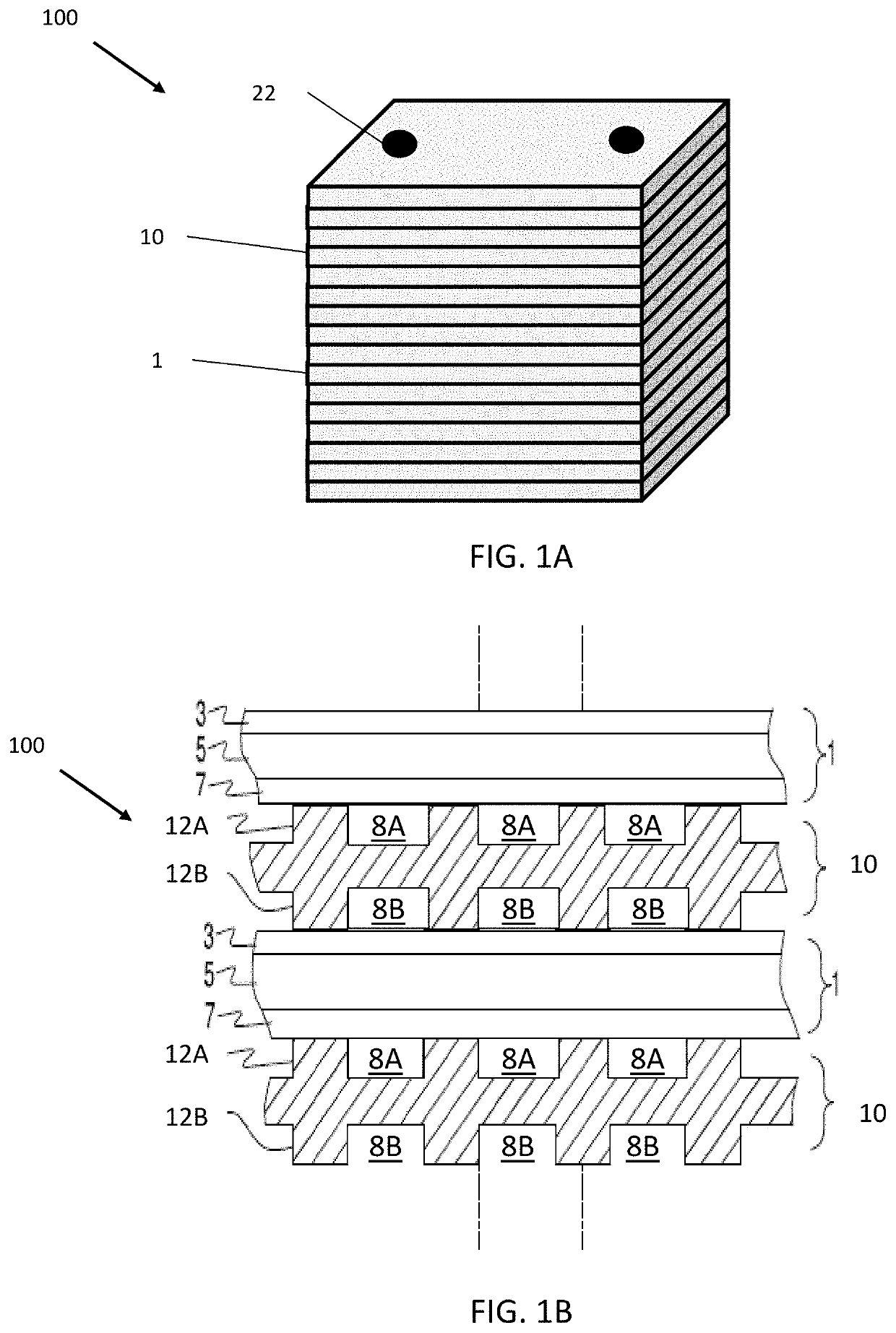
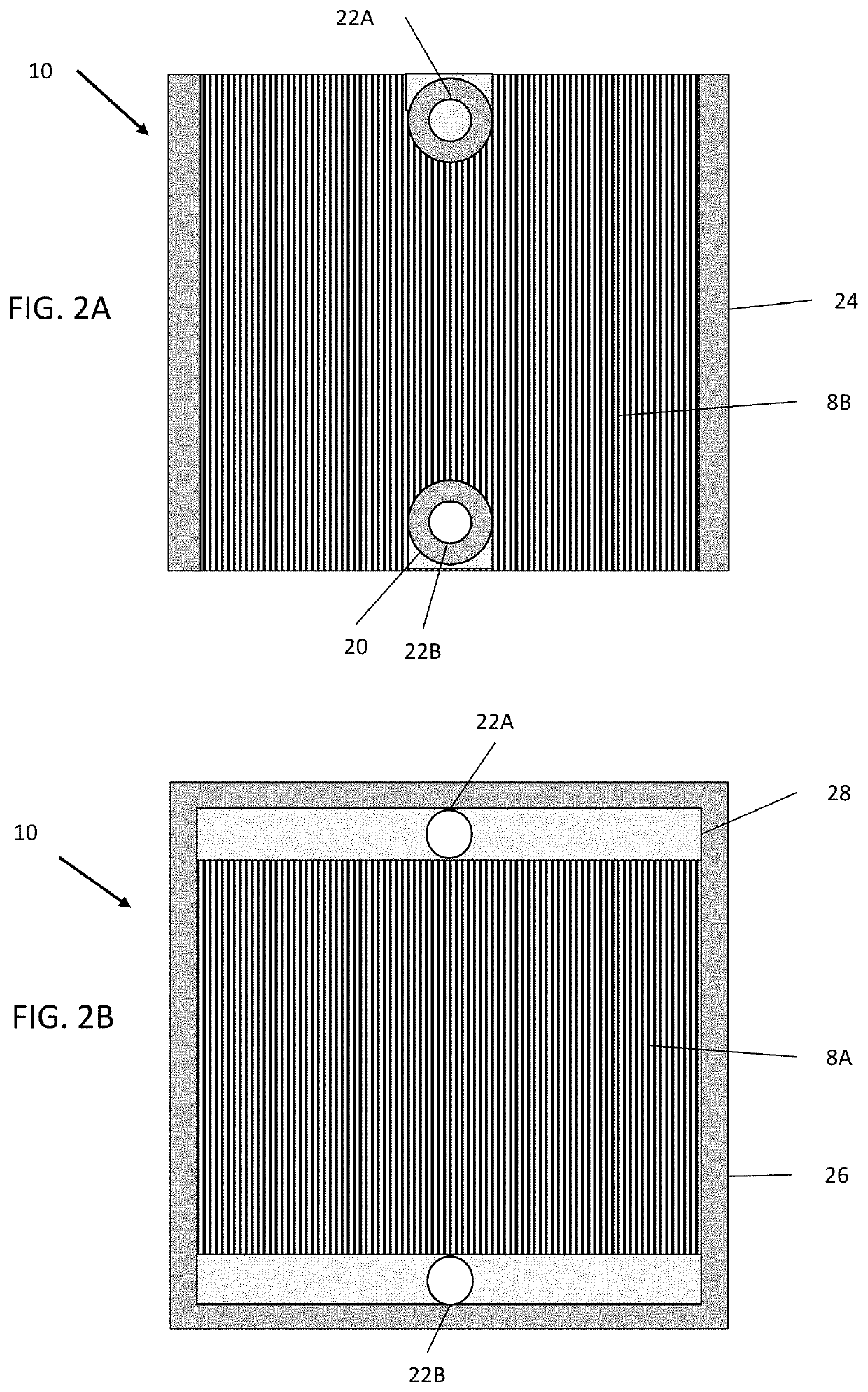
Try EurekaA solid oxide electrolyzer cell (SOEC) includes a solid oxide electrolyte, a fuel-side electrode on the fuel side, and an air-side electrode on the air side. The air-side electrode includes a barrier layer on the air side of the electrolyte containing a stabilized zirconia material with lower electrical conductivity than the electrolyte, plus a functional layer disposed on the barrier layer.Filed by Bloom Energy Corporation, published 2022-06-16.
| # | Publication no. | Patent title | Citations |
|---|---|---|---|
| 1 | EP1850412A1 | A multi-layer coating | 35 |
| 2 | US20170146481A1 | Solid Oxide Fuel Cells, Electrolyzers, and Sensors, and Methods of Making and Using the Same | 15 |
| 3 | US9670586B1 | Solid oxide fuel cells, electrolyzers, and sensors, and methods of making and using the same | 7 |
| 4 | US20220190373A1 | Solid oxide electrolyzer cell including electrolysis-tolerant air-side electrode | 6 |
| 5 | US20220052353A1 | Electrolysis or co-electrolysis reactor (SOEC) or fuel cell (SOFC) with electrochemical cell stacking by prea… | 5 |
| 6 | US20230223555A1 | Optimized Processing of Electrodes for SOFC and SOEC | 4 |
| 7 | EP4033573A1 | Wet sprayed coatings for interconnects for SOEC and sofc | 4 |
| 8 | WO2007121986A1 | A multi-layer coating | 3 |
| 9 | US10892511B2 | Stand-alone system for clamping a high-temperature SOEC/SOFC stack | 2 |
| 10 | EP2011184A1 | A multi-layer coating | 1 |
Citation counts reflect influence within the searched corpus and skew toward older filings; a low count on a recent record does not mean it is weak.
Each row carries its publication number; clicking a row searches Eureka by that number.
When you want the answer in the next five minutes.
The agent works the prompt against patents and technical literature, citing every source.
Run your analysis now →When it has to run inside your own pipeline.
Patent search, landscape analysis and assignee resolution as MCP tools. Drop them into any agent framework, or call REST directly.
Browse MCP servers →Reading the trend, the IPC mix and the citation table together points to a field that filled in its core claim space quickly and then slowed.
Filing climbed from one record in 2017 to a peak of 21 in 2022 and has not returned to that level since. For a corpus this size, that peak represents a large share of all activity concentrated in a short window — consistent with several manufacturers racing to lock down barrier-layer and contact-layer claims around the same time.
H01M and C25B between them account for nearly all records, with coating art (C23C) a distant third. Adjacent classes relevant to interface durability — material testing, layered-product structures, electroplating — each show only one or two records, which is thin coverage for what is fundamentally a materials-interface problem.
The United States receives the most filings at 16, with the EPO at 11 and Germany, Australia, Canada and India each in the single digits. That gap suggests applicants treat US rights as the primary commercial gate for this technology, filing into Europe as a secondary but still substantial market.
Eureka can read the same corpus for gaps instead of for coverage: under-claimed branches adjacent to solid oxide electrolyzer interface engineering, with the prior art for and against each one.
| Assignee | Co-assignee | Shared families |
|---|---|---|
| Technical University of Denmark (DTU) | MOGENSEN MOGENS | 1 |
| Technical University of Denmark (DTU) | MIKKELSEN LARS | 1 |
| Technical University of Denmark (DTU) | LINDEROTH SOEREN | 1 |
| Technical University of Denmark (DTU) | LARSEN PETER HALVOR | 1 |
| Technical University of Denmark (DTU) | HENDRIKSEN PETER VANG | 1 |
| SPEARS II D MORGAN | POZVONKOV MIKHAIL | 1 |
| SPEARS II D MORGAN | FISHER PAUL D | 1 |
| SPEARS II D MORGAN | DEININGER MARK A | 1 |
Only 10 co-assignee pairs appear across the corpus, and the strongest links tie a single university to individual named inventors rather than to other companies — a sign that most work here is being filed by single entities rather than through joint development programmes.
Assignee momentum in the most recent year is flat across the named organisations in this dataset — several show zero filings in the latest year, including one at a -100% year-on-year change. That pattern fits a corpus that peaked in 2022 and has since cooled, rather than one with an active new entrant displacing incumbents.
Several of the more active assignees in this corpus, including a national energy research body, a specialist SOEC manufacturer, and a technical university, show no filings in the most recent year tracked. This is consistent with the 2022 peak in the overall trend rather than a leader-specific slowdown.
Co-assignment shows up in only 10 pairs across the dataset, the strongest of which link one technical university to individually named academic inventors. There is little evidence here of cross-company joint filing, which typically means freedom-to-operate analysis can focus on individual assignees rather than tracing shared ownership chains.
The most-cited record in this corpus, a multi-layer coating patent, carries far more citations than any other record, with the next tier of cited work sitting in the single-to-mid teens. That gap is typical of a founding reference that later, more specific SOEC electrode work builds on and cites forward.
| Assignee | Recent year | YoY |
|---|---|---|
| French Alternative Energies and Atomic Energy Commission (CEA) | 0 | — |
| Bloom Energy Corporation | 0 | -100% |
| Technical University of Denmark (DTU) | 0 | — |
| Haldor Topsoe | 0 | — |
| SPEARS II D MORGAN | 0 | — |
| POZVONKOV MIKHAIL | 0 | — |
| MOGENSEN MOGENS | 0 | — |
| MIKKELSEN LARS | 0 | — |
The trend and rankings on this page are a starting point for deeper diligence, not a substitute for it.
The highest-citation patents in this corpus, including the multi-layer coating filing and the Bloom Energy air-side electrode family, are the ones most likely to have been cited against later applications in examination. Any new filing on barrier or contact layers should be checked against these first.
Explore prior art in EurekaA single sharp peak followed by cooling can mean the core claim space is settled, or it can mean the next wave has not yet published given the roughly 18-month filing-to-publication lag. Re-running this search in a year will clarify which is true.
Track filing trends in EurekaInterconnect coating adhesion and electroplated contact interfaces each show only a handful of records despite being directly relevant to SOEC stack durability. Confirming whether that thinness reflects a real technical gap, versus simply falling outside this search's terms, is worth a manual review.
Build a custom search in EurekaIn this landscape, interface engineering covers the specific contact points inside an SOEC stack where degradation typically originates: the electrode-electrolyte interface, the electrode-interconnect interface, and the contact or barrier layers used to control interfacial chemical reactions. These are distinct from broader cell-architecture or system-level claims. The dataset was built by combining these subject-matter terms with IPC codes for electrolytic hydrogen production and fuel-cell hardware, so it captures the materials-interface layer of SOEC design specifically rather than the whole electrolyzer field.
The data shows filings climbing from a single record in 2017 to 21 in 2022, the highest point in the tracked period, with no year since matching that level. This kind of peak commonly follows a period when several manufacturers file competing claims on the same emerging problem, in this case interfacial degradation control, within a short window. It does not necessarily mean the technology has matured; publication lag of roughly 18 months means the most recent one to two years are always undercounted until later filings catch up in the record.
Citation counts in this corpus point to an older multi-layer coating patent as the most-cited reference, well ahead of the next tier of records, which include Bloom Energy Corporation's air-side electrode work and earlier filings covering solid oxide fuel cells, electrolyzers and sensors together. High citation counts favour older filings simply because they have had more time to be cited, so treat them as a signal of foundational influence rather than of which patents are most commercially active today.
The IPC composition shows heavy concentration in two subclasses, H01M and C25B, with coating and deposition art a distant third. Branches like interconnect coating adhesion layers, electroplated contact interfaces, layered-laminate seal structures and in-situ degradation testing methods each appear in only one or two records in this search, which suggests they are either genuinely under-claimed or simply underexplored by applicants using this specific terminology. Either way, they are worth a closer manual search before assuming the space is crowded.
US20220190373A1, assigned to Bloom Energy Corporation, claims an air-side electrode structure built from a barrier layer of stabilized zirconia with lower conductivity than the electrolyte, plus a separate functional layer on top of it. It does not block every air-side electrode design; it specifically covers this two-layer barrier-plus-functional-layer construction on the air side. Designs using different barrier materials, single-layer air-side electrodes, or barrier layers with conductivity at or above the electrolyte's would sit outside this specific claim as described, though a full freedom-to-operate review would need to check the granted claim language rather than the abstract alone.
Go past this page: query the whole solid oxide electrolyzer interface engineering corpus yourself, in your own scope.
Every answer comes back with patent numbers you can open.
Disclaimer. This page is generated from Patsnap Eureka data drawn from a limited snapshot of global patent and scientific-literature records, and is provided for general information and reference only.
Patent data carries inherent limitations: recent filings (typically the most recent 18–24 months) are under-counted due to standard publication lag; counts may be reported at either a patent-family or a patent-record basis and are not always directly comparable; classification, applicant-name, and citation data may contain errors, duplicates, or omissions; and the underlying search query defines and constrains the scope shown. As a result, the analysis may be incomplete or inaccurate and may not reflect the full technology landscape.
Nothing on this page constitutes an exhaustive prior-art, novelty, freedom-to-operate, or validity search, nor does it constitute legal, financial, investment, or professional advice, and it should not be relied upon as such. Any patent, commercial, or strategic decision should be verified independently and reviewed with qualified patent, legal, and domain professionals. Patsnap makes no warranties, express or implied, as to the accuracy, completeness, or fitness for any particular purpose of the information presented.
Machine translation. Assignee and organisation names originally recorded in Chinese, Japanese or Korean have been rendered into English by an AI translation step so that the tables stay readable. These renderings are best-effort and may not match a company's registered English name; the original name is what the underlying patent record carries, and it is what any Eureka query launched from this page uses.
Help us improve
Something wrong, out of date, or missing on this page? Tell us and it goes straight to the team that maintains it.
This page