Fastest
Eureka on the web
When you want the answer in the next five minutes.
The agent works the prompt against patents and technical literature, citing every source.
Run your analysis now →Filing growth compares 2021 (19 records) with 2024 (35) — a three-year span. 2024 is the most recent year we treat as complete: publication lags filing by roughly 18 months, so 2025 onwards are still filling in and any growth rate that ends there would understate the field. Top-5 share is the combined record count of the five largest assignees divided by all 252 records in scope (CR5), not by the ranked leaders only.
This landscape tracks patent families filed against solid oxide electrolyzer (SOEC) and solid oxide cell subject matter, scoped to fuel-electrode, electrolyte-supported cell and reversible solid oxide cell claims under C25B9/23, C25B11 and H01M8/12. The corpus spans 2015 through mid-2026 and totals 252 patent families, giving a fair unit of comparison across jurisdictions rather than counting duplicate filings of the same invention.
Filing activity concentrates in two IPC subclasses — batteries/fuel cells and electrolytic production of compounds — with a thinner but present tail in ceramics, catalysis, coating and hydrocarbon processing. That tail marks where SOEC intersects adjacent disciplines rather than where it is centred.
Two views of the same 252 families: how filing volume has moved year over year, and how those filings distribute across the eight IPC subclasses touched by this search.
From 19 filings in 2017 to a peak of 51 in 2023, with 2022 sitting at the midpoint of 38. The most recent year is partial and will understate true 2026 volume — publication typically lags filing by around 18 months — but the post-2023 direction is a pullback rather than continued acceleration.
H01M (batteries, cells & fuel cells) and C25B (electrolytic production of compounds) account for the bulk of records at 200 and 181 respectively, confirming this is fundamentally a cell-and-electrolysis technology. C04B (ceramics), B01J (catalysis) and C23C (coating) each register in single or low double digits, marking narrower, more specialised filing activity around materials and surface treatment rather than core cell architecture.
Shares are the percentage of the 252 records in scope. A patent can carry several IPC classes, so the shares add up to more than 100%.
This page is one run against one query. Ask Eureka your own question about solid oxide electrolyzer solid oxide cell and every answer comes back with the patent numbers behind it.
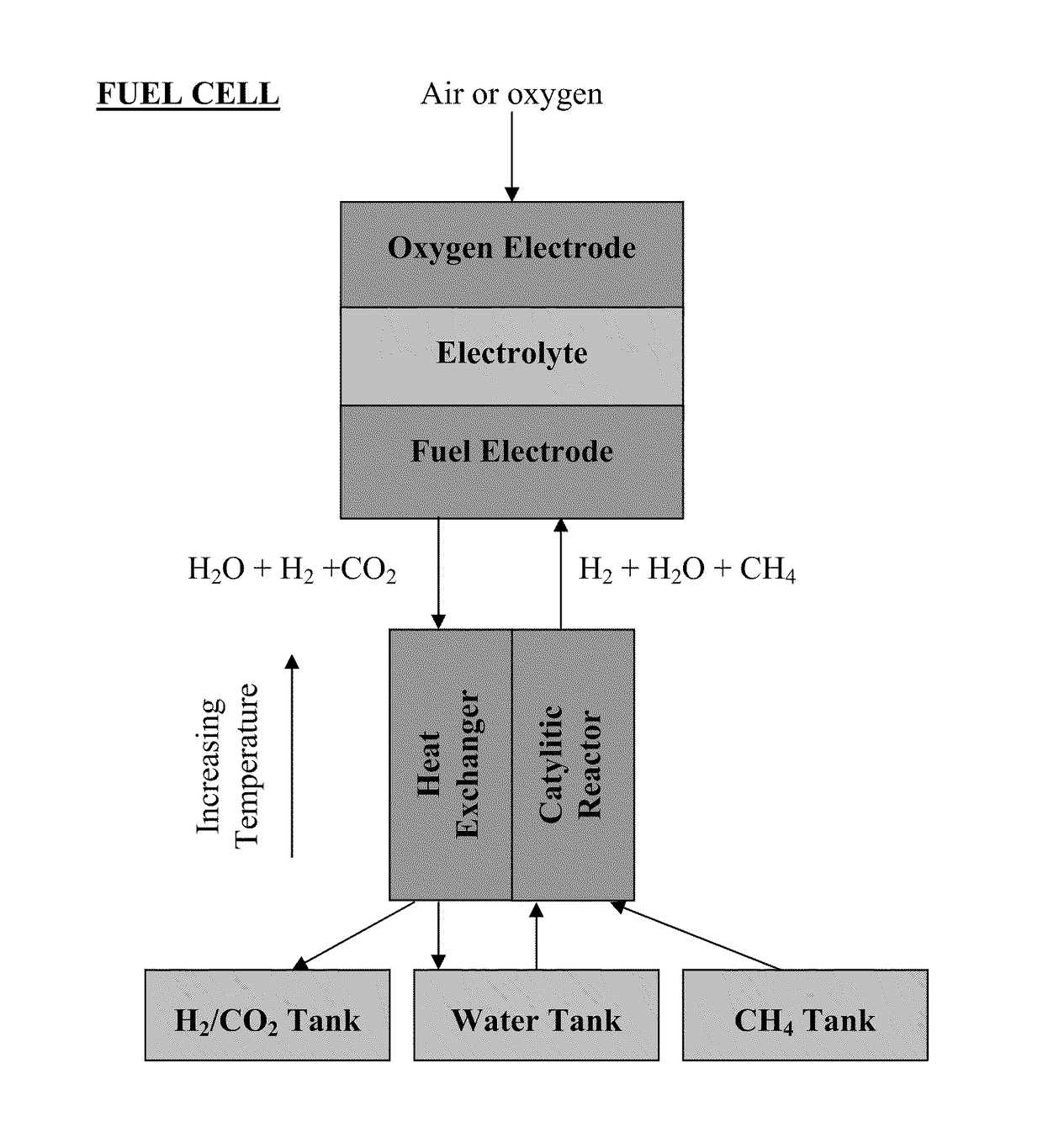
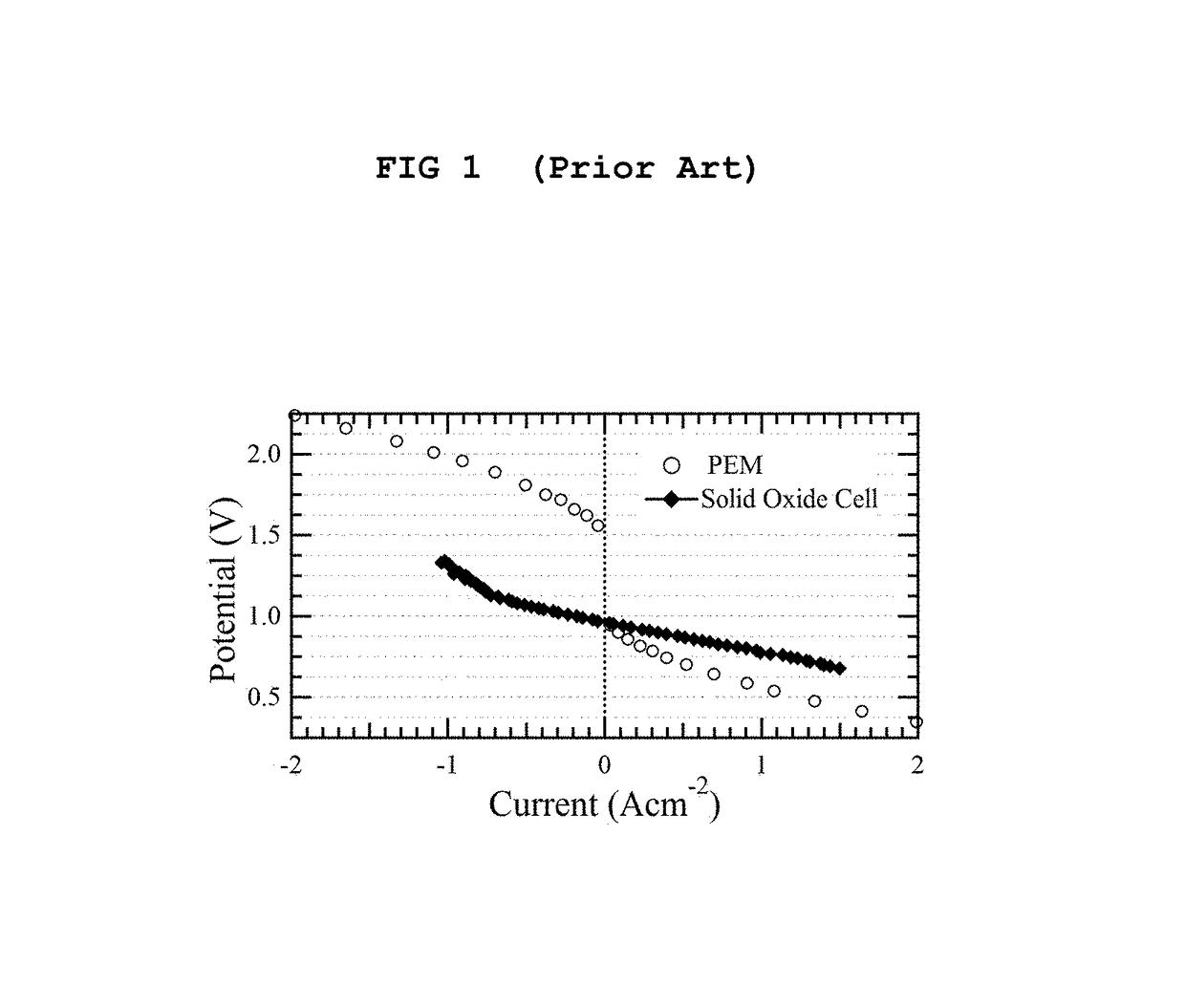
Try EurekaA method for improving the efficiency and durability of reversible solid oxide cells during electrical energy storage is disclosed. The method utilizes a specific set of operating conditions that produces a storage chemistry where approximately thermal-neutral operation can be achieved at low cell over-potentials. Also disclosed are reversible solid oxide cell energy storage system configurations, including one that utilizes storage in natural gas and water storage/distribution networks, thereby reducing storage cost.Filed by Northwestern University, granted 2018-04-17 — an operating-conditions claim rather than a materials or stack-architecture claim, which is part of why it reads narrowly enough to still leave design-around room.
| # | Publication no. | Patent title | Citations |
|---|---|---|---|
| 1 | US20060166070A1 | Solid oxide reversible fuel cell with improved electrode composition | 91 |
| 2 | EP3725917A1 | Solid oxide cell (SOC) operation method and solid oxide cell (SOC) assembly | 65 |
| 3 | WO2020126486A1 | Fuel cell unit and fuel cell stack | 43 |
| 4 | US20190194816A1 | Process for starting mode or stand-by mode operation of a power-to-gas unit comprising a plurality of high-te… | 25 |
| 5 | US20180086984A1 | Direct Synthesis Of Hydrocarbons From Co-Electrolysis Solid Oxide Cell | 25 |
| 6 | KR1020130047534A | Solid oxide fuel cell and solid oxide electrolysis cell including Ni-YSZ fuel(hydrogen) electrode, and fabric… | 25 |
| 7 | WO2017116307A1 | A promising co- electrolyzer for the direct use of FLUE gas from power plant | 20 |
| 8 | US20180066371A1 | Method for preparing fuel electrode of solid oxide electrolysis cells embedded with bimetallic catalyst | 20 |
| 9 | JP2014089816A | Electrochemical cell and manufacturing method thereof | 16 |
| 10 | WO2018080571A1 | Solid oxide electrolysis with internal heater | 15 |
Citation counts reflect influence inside this searched corpus and skew toward older filings; treat them as a map of which claims later filers had to design around, not as a ranking of current importance.
Each row carries its publication number; clicking a row searches Eureka by that number.
When you want the answer in the next five minutes.
The agent works the prompt against patents and technical literature, citing every source.
Run your analysis now →When it has to run inside your own pipeline.
Patent search, landscape analysis and assignee resolution as MCP tools. Drop them into any agent framework, or call REST directly.
Browse MCP servers →Three read-outs from the trend, the IPC split and the citation table, each with a direct implication for where to file next.
Filings climbed steadily from 19 in 2017 to a 2023 peak of 51, then eased off. A flat-to-declining trajectory after a clear peak usually signals that the core architecture claims — cell stack design, electrolyte-supported configurations, basic reversible operation — are largely staked out, and new entrants are more likely to compete on narrower improvement claims than on foundational ones.
The concentration in H01M and C25B confirms most activity targets the cell and the electrolysis process itself. C04B's 13 records is a small fraction of that, which is notable given how central electrolyte and electrode ceramics are to SOEC durability — that gap is either genuine white space or work being filed under different classification codes worth checking separately.
The most-cited record in this corpus dates to a 2006 filing on reversible fuel cell electrode composition, cited 91 times. Filers today are working two decades downstream of that priority date, which means freedom-to-operate work needs to reach back further than a five- or ten-year prior-art search would normally cover.
United States leads at 65 records, ahead of Europe at 47 and WIPO/PCT filings at 34. Japan and China sit lower at 26 and 20 respectively, and Canada at 15 — a spread that suggests commercial focus remains weighted toward North American and European markets rather than a China-led filing pattern seen in some adjacent battery technologies.
Eureka can read the same corpus for gaps instead of for coverage: under-claimed branches adjacent to solid oxide electrolyzer solid oxide cell, with the prior art for and against each one.
The assignee ranking (rendered separately) shows concentration among a handful of established fuel-cell and automotive names, with co-filing pairs pointing to a small number of active research partnerships.
The strongest co-assignee pair links two automotive groups at 6 shared filings, with two further pairs — a fuel-cell specialist with a technical university, and an automotive group with a university technology-transfer office — each at 3. These patterns point to structured R&D collaborations rather than incidental co-ownership.
A number of longstanding assignees — including firms with prior double-digit portfolios — show no filings in the most recent year tracked, with year-over-year drops of -100% recorded for at least two. Given the 18-month publication lag, some of this is an artefact of timing rather than a genuine stop in R&D, but it is worth checking directly with any assignee before assuming continued activity.
At 252 families, this is a moderate-sized technology corpus — large enough to show clear leaders and a long tail, small enough that a handful of additional filings from any one assignee would shift the ranking. That makes ongoing monitoring more useful here than in a saturated field where rankings barely move.
| Assignee | Recent year | YoY |
|---|---|---|
| Bloom Energy Corporation | 0 | -100% |
| Haldor Topsoe A/S | 0 | — |
| Ceres Intellectual Property Company Limited | 0 | — |
| NGK Spark Plug Co., Ltd. | 0 | -100% |
| Commissariat à l'énergie atomique et aux énergies alternatives (CEA) | 0 | — |
| Precision Combustion, Inc. | 0 | — |
| Technical University of Denmark (DTU) | 0 | — |
| Hyundai Motor Company | 0 | -100% |
The data points to a field with occupied core claims and a thinner periphery. Two directions follow from that.
The most-cited record in this corpus dates back to 2006. Any new fuel-electrode composition or reversible-cell operating-conditions claim should be checked against that depth of prior art, not just the last five years of filings.
Run a freedom-to-operate search in EurekaSeveral established filers show zero filings in the latest tracked year. Confirming whether that reflects publication lag, a strategic pause, or a genuine exit matters before assuming the field remains as concentrated as the historical ranking implies.
Set up assignee monitoring in EurekaThis landscape identifies 252 patent families filed between 2015 and mid-2026 that match solid oxide electrolyzer, SOEC and solid oxide cell claim language under the relevant IPC codes. That figure counts families rather than individual publications, which avoids double-counting continuations and multi-jurisdiction filings of the same invention. The true figure for any broader search string or later cut-off date will differ, since publication typically lags filing by around 18 months.
The dataset shows filing concentrated among a set of established fuel-cell, automotive and research-institution assignees, with a long tail of single- or few-filing entrants behind them. Several of the most active historical filers show no recorded filings in the most recent tracked year, so current-year momentum should be checked separately from cumulative portfolio size. Co-filing patterns, particularly between automotive groups and university partners, point to active joint R&D rather than isolated corporate programs.
Solid oxide electrolyzer (SOEC) claims typically cover operation in reverse of fuel-cell mode — using electricity to split water or co-electrolyse water and CO2 into hydrogen and syngas — while solid oxide fuel cell (SOFC) claims cover electricity generation from fuel. Many records in this corpus, including the representative filing from Northwestern University, explicitly claim reversible solid oxide cell (rSOC) operation covering both modes. The IPC classification split in this dataset, with heavy overlap between H01M (fuel cells) and C25B (electrolytic production), reflects that dual-mode claiming pattern.
Relative to the core cell and electrolysis claims concentrated in H01M and C25B, subclasses covering ceramics (C04B), catalysis (B01J) and coating processes (C23C) show markedly fewer filings. That gap suggests fuel-electrode material composition, electrolyte-supported cell coating processes and co-electrolysis catalyst formulations carry lower filing density relative to their technical importance to SOEC durability and efficiency. It is not proof the space is unclaimed — some of that work may sit under different classification codes — but it is a reasonable starting point for a freedom-to-operate search.
The dataset shows filings rising from 19 in 2017 to a peak of 51 in 2023, then declining. This pattern is typical of a technology moving out of its initial land-grab phase, where foundational architecture and operating-method claims get staked out early, followed by a natural slowdown as incremental improvement claims replace foundational ones. Because publication lags filing by roughly 18 months, the most recent one to two years in any trend chart will understate the true filing volume, so the 2023 peak may partly reflect a reporting artefact rather than a definitive ceiling.
Go past this page: query the whole solid oxide electrolyzer solid oxide cell corpus yourself, in your own scope.
Every answer comes back with patent numbers you can open.
Disclaimer. This page is generated from Patsnap Eureka data drawn from a limited snapshot of global patent and scientific-literature records, and is provided for general information and reference only.
Patent data carries inherent limitations: recent filings (typically the most recent 18–24 months) are under-counted due to standard publication lag; counts may be reported at either a patent-family or a patent-record basis and are not always directly comparable; classification, applicant-name, and citation data may contain errors, duplicates, or omissions; and the underlying search query defines and constrains the scope shown. As a result, the analysis may be incomplete or inaccurate and may not reflect the full technology landscape.
Nothing on this page constitutes an exhaustive prior-art, novelty, freedom-to-operate, or validity search, nor does it constitute legal, financial, investment, or professional advice, and it should not be relied upon as such. Any patent, commercial, or strategic decision should be verified independently and reviewed with qualified patent, legal, and domain professionals. Patsnap makes no warranties, express or implied, as to the accuracy, completeness, or fitness for any particular purpose of the information presented.
Machine translation. Assignee and organisation names originally recorded in Chinese, Japanese or Korean have been rendered into English by an AI translation step so that the tables stay readable. These renderings are best-effort and may not match a company's registered English name; the original name is what the underlying patent record carries, and it is what any Eureka query launched from this page uses.
Help us improve
Something wrong, out of date, or missing on this page? Tell us and it goes straight to the team that maintains it.
This page