








Hyperloop System Simulation and Modeling Patent Landscape 2026
- 13 families total across the full 2015-2026 window, with filings peaking at 8 in 2021 and falling to 3 by 2022 — a small, concentrated corpus rather than a sprawling field.
- B61B and E01B hold 11 and 8 records respectively while control software (B61L), commercial logic (G06Q) and locomotive-specific claims (B61C) sit at 1-3 records each, marking the open ground.
- Two records carry the field's citation weight WO2022150107A1 (cited 2) and WO2023091252A1 (cited 1) are the anchor documents any freedom-to-operate review in this space should start with.
A small, infrastructure-heavy corpus
Hyperloop system simulation and modeling is a niche but technically distinct corner of rail and transit IP: filings combine vacuum-tube transport terminology with classification codes for computer-aided design (G06F30), rail systems (B61B13/10) and pump/compressor modeling (F04B37). Across the full search window this produces only 13 patent families — small enough that the ranking, the citation table and the IPC breakdown each carry real weight rather than being smoothed over by volume.
The filings skew heavily toward system-level infrastructure — railway systems and track engineering account for the bulk of records — while control software, commercial network-design logic and locomotive-specific claims remain comparatively unclaimed. Publication lags filing by roughly 18 months, so any read on the most recent one or two years should be treated as a floor, not a ceiling.
Filing trend and technology composition
Thirteen patent families is a small enough set that every filing year and every IPC subclass carries visible weight — there is no long tail to average out a spike or a gap.
Filings peaked in 2021, then declined
Filings were flat at zero through 2017, rose to a peak of 8 in 2021, and had fallen to 3 by the 2022 midpoint. With publication lagging filing by roughly 18 months, 2025-2026 figures are structurally undercounted, but the drop across the midpoint is a genuine slowdown signal rather than an artefact of the lag.
B61B and E01B dominate; software and controls are thin
Railway systems (B61B, 11 records) and track/permanent-way engineering (E01B, 8 records) carry most of the filing weight. Traffic control (B61L), business-process data processing (G06Q) and general digital processing (G06F) each sit at 2-3 records, and locomotive/railcar claims (B61C) appear only once — a sign that hardware and infrastructure claims have been staked out well ahead of control-software and commercial-logic claims.
Go deeper on Hyperloop System Simulation and Modeling with Eureka
This page is one run against one query. Ask Eureka your own question about hyperloop system simulation and modeling and every answer comes back with the patent numbers behind it.
Try EurekaRepresentative patent in this landscape
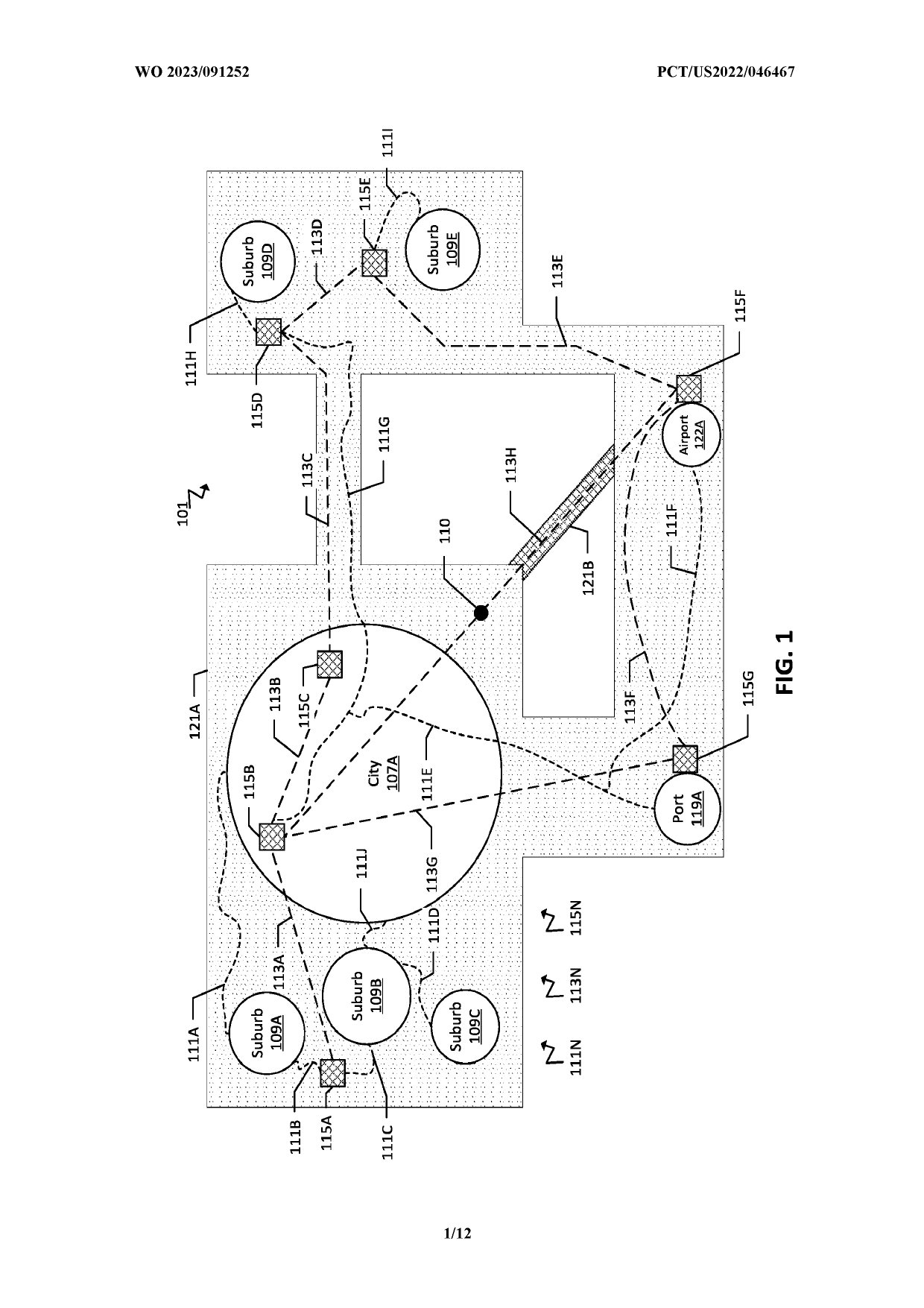
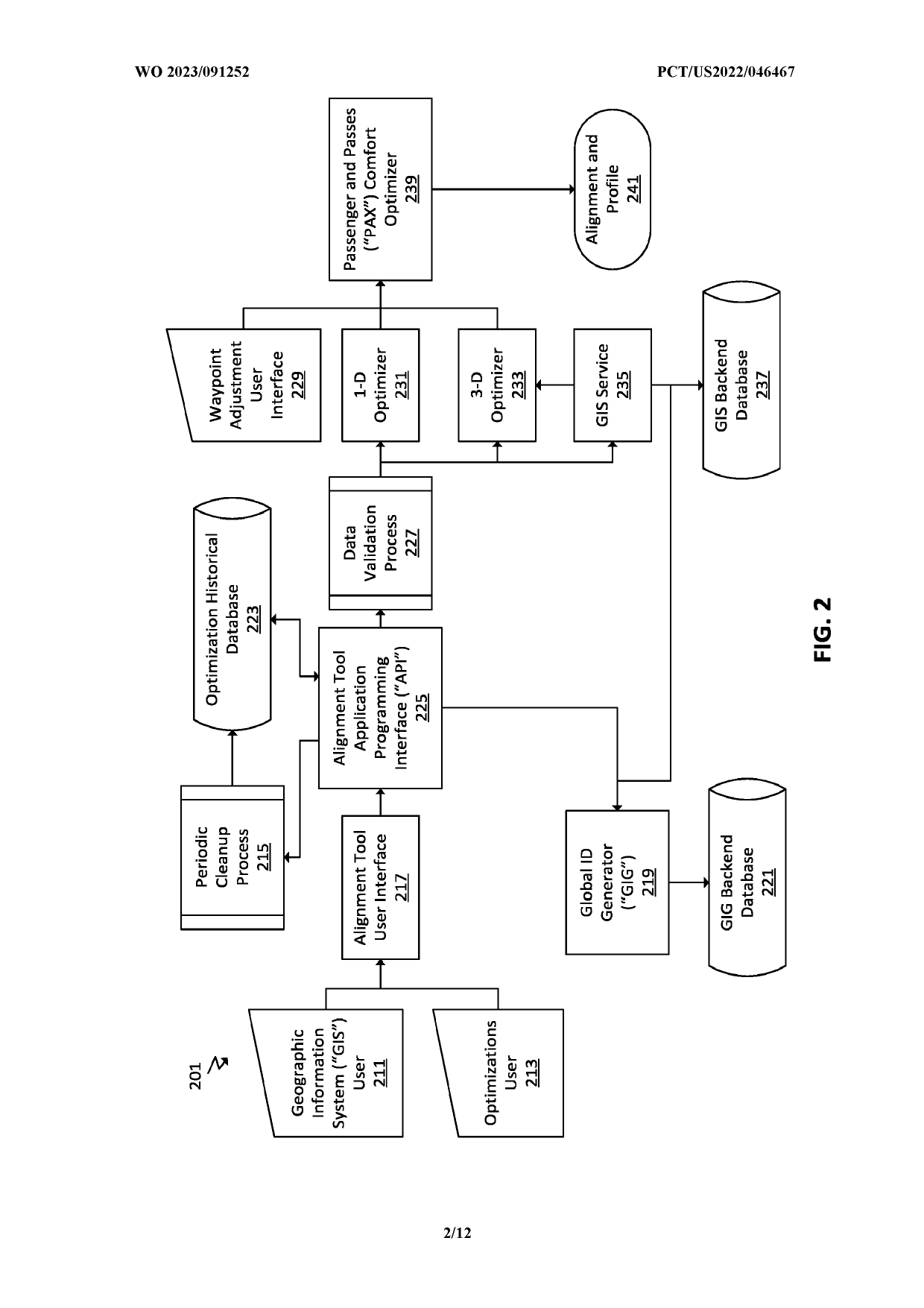
System and method for hyperloop network design and simulation
A solution is disclosed for designing a transportation network comprising hyperloop. The system generates a hyperloop route between two locations, letting a user interact with the route via a user interface while the system performs optimisations against constraints and limits. A genetic algorithm handles multi-parameter optimisation of the candidate route, with a lighter single-parameter optimizer offered for lower-compute scenarios.Abstract trimmed for length — full text available via the linked record.
| # | Publication no. | Patent title | Citations |
|---|---|---|---|
| 1 | WO2022150107A1 | System and method for simulating a multimodal transportation network | 2 |
| 2 | WO2023091252A1 | System and method for hyperloop network design and simulation | 1 |
Ranked by citation count within the searched dataset; older records tend to accumulate more citations regardless of current relevance.
Publication numbers are shown where the record carries one (2 of 2 rows); clicking a row searches Eureka by that number.
Put your own technology through the same analysis
Eureka on the web
When you want the answer in the next five minutes.
The agent works the prompt against patents and technical literature, citing every source.
Run your analysis now →MCP server & REST API
When it has to run inside your own pipeline.
Patent search, landscape analysis and assignee resolution as MCP tools. Drop them into any agent framework, or call REST directly.
Browse MCP servers →What the filing pattern signals
With only 13 families in the searched corpus, each subclass count and each citation is a meaningful data point rather than statistical noise — but that also means conclusions should stay proportionate to the sample size.
Infrastructure claims dominate
Railway systems and cableways (B61B) appear in 11 of the 13 tracked families, with track/permanent-way engineering (E01B) close behind at 8. Simulation-specific software claims (G06F) appear in only 2 records, meaning most protected ground here is system-level rather than algorithmic.
Activity has cooled since 2021
Filings rose to a peak of 8 in 2021 and had fallen to 3 by 2022. Given the roughly 18-month gap between filing and publication, the true 2025-2026 count is understated, but the decline through the midpoint is a real signal of reduced near-term filing pressure.
Citation weight sits with two documents
WO2022150107A1 and WO2023091252A1 carry the only meaningful citation counts in the set. In a corpus this size, that concentration means most freedom-to-operate risk traces back to a very short list of documents rather than a broad field of prior art.
Eureka can read the same corpus for gaps instead of for coverage: under-claimed branches adjacent to hyperloop system simulation and modeling, with the prior art for and against each one.
Who is filing, and where the gate sits
Momentum among the named assignees has flattened at the latest reported year, and the field's receiving-office spread points to Europe and India as the most active filing routes alongside the WIPO/PCT track.
Europe leads office-level filing
The European Patent Office receives the largest single share of filings (4), followed by India (3) and the WIPO/PCT route (3). The United States and Germany each account for only 1-2 records, suggesting this technology's protection strategy so far has centred on Europe and India rather than the US.
Recent-year activity has gone quiet
The tracked assignees — including 浦项综合制铁股份有限公司, 印度理工学院马德拉斯分校 and 超级高铁技术公司 — each show zero filings in the latest reported year, with one recording a -100% year-on-year change. That is consistent with the broader post-2021 filing decline seen across the corpus.
No dominant filer yet
With only 13 families spread across multiple assignees and receiving offices, no single entity has built a commanding position. That leaves the field's key blocking claims concentrated in a couple of highly-cited documents rather than in any one assignee's portfolio.
| Assignee | Recent year | YoY |
|---|---|---|
| POSCO | 0 | — |
| Indian Institute of Technology Madras (IIT Madras) | 0 | -100% |
| Hyperloop Technologies, Inc. | 0 | — |
Where to take this analysis
The filing pattern here points to two practical next moves: confirm freedom-to-operate against the two highly-cited records, and evaluate the under-claimed control and fabrication branches before they fill in.
Run a freedom-to-operate check on the anchor claims
WO2022150107A1 and WO2023091252A1 carry disproportionate citation weight in this 13-family corpus. Any product or filing strategy in hyperloop route simulation or optimisation should map its claims against these two documents first.
Check claims in EurekaEvaluate the control-software and fabrication gaps
B61L traffic control, B23P fabrication methods and B61C locomotive-specific claims each show single-digit filing counts. That is room to file a specific, defensible claim before the space densifies.
Explore white space in EurekaQuestions practitioners ask about this landscape
The tracked dataset contains 13 patent families published between 2015 and mid-2026, filtered to records combining hyperloop or vacuum-tube transport terminology with simulation-specific classification codes such as G06F30, B61B13/10 and F04B37. This is a narrow, technically-defined slice of the broader hyperloop patent space, not a count of every hyperloop-related filing. Because of the ~18-month publication lag, the most recent filing years are undercounted and the true total for 2025-2026 will rise as more applications publish.
Filings rose to a peak of 8 in 2021 before falling to 3 by 2022, which tracks with the broader pullback in hyperloop commercial activity during that period. A decline in filings does not necessarily mean the underlying technology stalled; it can also mean the core simulation methods were already claimed and later entrants shifted effort into adjacent areas like control software or fabrication. Readers should treat the 2025-2026 near-zero figures cautiously given the publication lag rather than reading them as a hard stop in activity.
Railway systems and cableways (B61B) leads with 11 of 13 records, followed by railway track and permanent-way engineering (E01B) at 8. Traffic control (B61L), business-process data handling (G06Q) and general digital data processing (G06F) each appear in only 2-3 records, and locomotive/railcar-specific claims (B61C) show up just once. That distribution indicates infrastructure and system-level engineering claims are far denser than control-logic or software-specific claims in this corpus.
WO2023091252A1, assigned to Hyperloop Technologies, Inc., protects the specific combination of generating a candidate hyperloop route between two locations and optimising it with a genetic algorithm across more than one parameter, plus a lower-compute single-parameter optimizer alternative. It does not block hyperloop route simulation generally, nor optimisation methods built on a different structural approach, such as fixed-topology or gradient-based solvers. Its citation count of 1 within this corpus suggests its practical claim boundaries have not yet been heavily tested by competing filings.
The thinnest subclasses in this dataset are B61L traffic control (3 records), B23P fabrication/assembly methods (2 records) and B61C locomotive/railcar-specific claims (1 record), all sitting well below the B61B and E01B infrastructure cluster. That gap suggests real-time control algorithms tied to physical sensor feedback, and manufacturing methods for pod or tube segments, are under-claimed relative to system-level engineering. A filer targeting those subclasses with a specific technical claim structure would face comparatively little blocking prior art in this corpus.
Research Hyperloop System Simulation and Modeling in depth with Eureka
Go past this page: query the whole hyperloop system simulation and modeling corpus yourself, in your own scope.
Every answer comes back with patent numbers you can open.
Disclaimer. This page is generated from Patsnap Eureka data drawn from a limited snapshot of global patent and scientific-literature records, and is provided for general information and reference only.
Patent data carries inherent limitations: recent filings (typically the most recent 18–24 months) are under-counted due to standard publication lag; counts may be reported at either a patent-family or a patent-record basis and are not always directly comparable; classification, applicant-name, and citation data may contain errors, duplicates, or omissions; and the underlying search query defines and constrains the scope shown. As a result, the analysis may be incomplete or inaccurate and may not reflect the full technology landscape.
Nothing on this page constitutes an exhaustive prior-art, novelty, freedom-to-operate, or validity search, nor does it constitute legal, financial, investment, or professional advice, and it should not be relied upon as such. Any patent, commercial, or strategic decision should be verified independently and reviewed with qualified patent, legal, and domain professionals. Patsnap makes no warranties, express or implied, as to the accuracy, completeness, or fitness for any particular purpose of the information presented.
Machine translation. Assignee and organisation names originally recorded in Chinese, Japanese or Korean have been rendered into English by an AI translation step so that the tables stay readable. These renderings are best-effort and may not match a company’s registered English name; the original name is what the underlying patent record carries, and it is what any Eureka query launched from this page uses.