








Solid Propellant Formulation Patents: Who Leads, Trends 2026
- Filings have flattened, not grown. the peak year sits at 2023 with 17 filings, and the count from the 2022 midpoint shows no sustained climb since — this is a mature, cyclical field rather than an expanding one.
- The most-cited art is decades old. the top-cited record dates to the 1970s epoxy-cured binder patent, and three of the five most-cited documents concern rapid-burning charges for airbag inflators and igniters, not modern rocket motors.
- Every tracked assignee has gone quiet in the latest year. each of the six leading filers in the momentum table shows zero filings in the most recent year, which is partly a publication-lag artefact but also consistent with a field where the founding IP has already been staked out.
What This Landscape Covers
Solid propellant formulation patents cover the composition and processing claims behind composite and solid rocket and gas-generator propellants: binder systems, oxidizer particle size and distribution, burn-rate modifiers, mechanical property control, and aging behaviour. The corpus behind this page spans 540 patent families filed or published between 2015 and mid-2026, drawn from documents that combine propellant-formulation language in the title with burn-rate, binder, mechanical-property or aging terms in the title or claims, and classified under C06B45, C06D5 or F02K9.
Because publication lags filing by roughly 18 months, the last one to two years in any trend chart will look thinner than they eventually turn out to be once late filings publish. Read the most recent bars as a floor, not a ceiling.
Filing Trend and Technology Composition
Two views of the same 540-family corpus: how filing volume has moved year over year, and which IPC subclasses carry the claim density.
Filings by year, 2017–2026
Annual filings opened at 10 in 2017, rose to a peak of 17 in 2023, and sit at 1 in 2026 — a figure still climbing as later filings publish. The 2022 midpoint of 7 confirms the field has been flat to declining rather than growing across the window.
IPC subclass distribution
C06B (explosives and propellants) dominates with 356 records, more than F02K (jet and reaction propulsion, 208) and C06D (gas-generating compositions, 135) combined relative to the total. Smaller counts in C08G, F42B, C08L, C08K and B64G mark where propellant chemistry overlaps polymer science, ammunition hardware and spacecraft systems — thinner claim territory than the core three subclasses.
Go deeper on Solid Propellant Formulation with Eureka
This page is one run against one query. Ask Eureka your own question about solid propellant formulation and every answer comes back with the patent numbers behind it.
Try EurekaMost-Cited Records and a Representative Filing
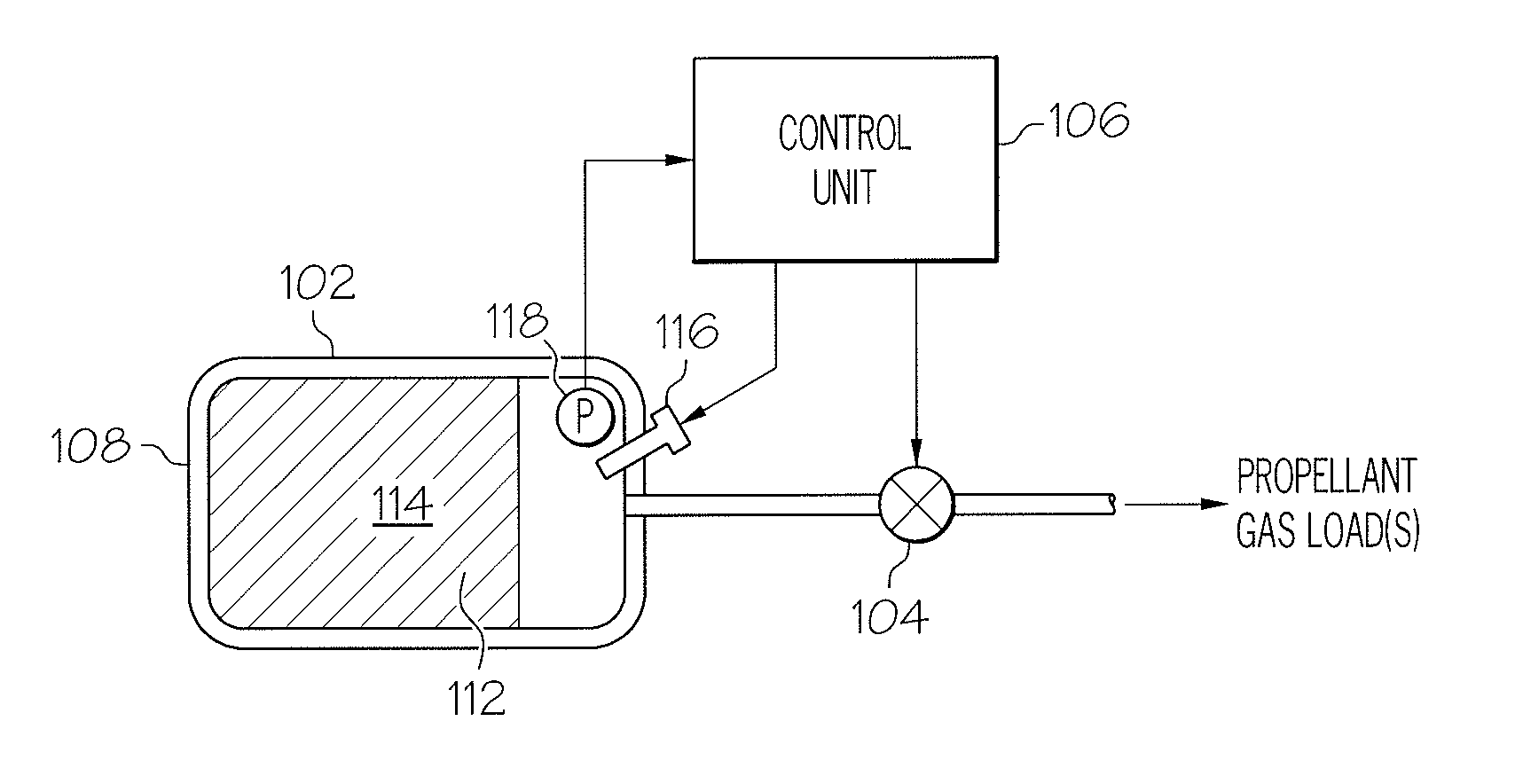
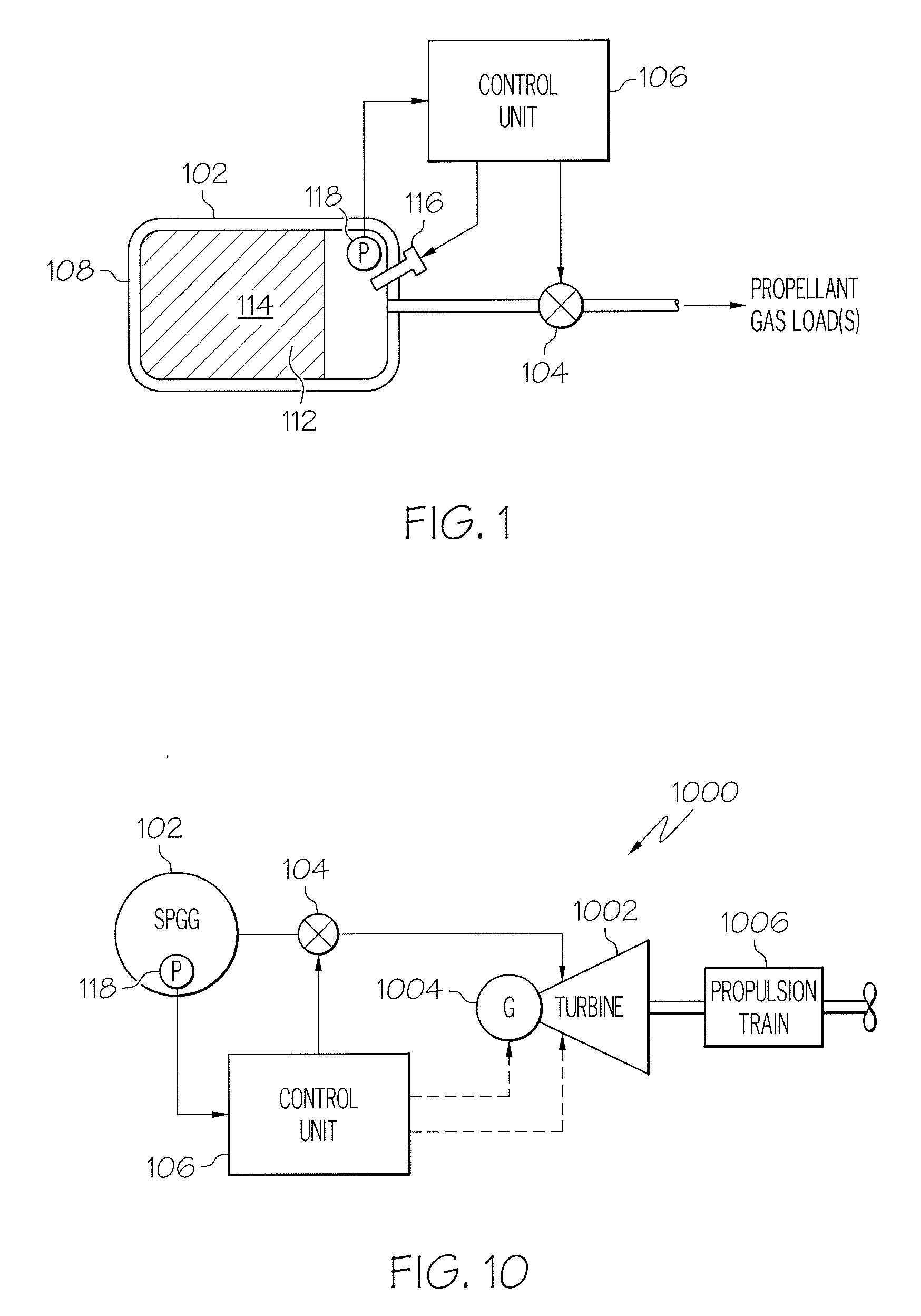
US20080216462A1 — Solid propellant burn rate, propellant gas flow rate, and propellant gas pressure pulse generation control system and method
Systems and methods of controlling solid propellant burn rate, propellant gas pressure, propellant gas pressure pulse shape, and propellant gas flow rate, rely on pulse width modulation of a control valve duty cycle. A control valve movable between a closed position and a full-open position is disposed downstream of a solid propellant gas generator; the propellant is ignited to generate gas, and the valve cycles between closed and full-open at an operating frequency and duty cycle.Filed by Honeywell International, Inc., published 2008-09-11 — control-side claims that sit adjacent to, rather than inside, the composition claims most of this corpus covers.
| # | Publication no. | Patent title | Citations |
|---|---|---|---|
| 1 | US3948698A | Solid propellant compositions having epoxy cured, carboxy-terminated rubber binder | 97 |
| 2 | US10501385B1 | Nanocomposite enhanced fuel grains | 71 |
| 3 | US5404813A | Propellant formulation and process | 67 |
| 4 | US5062365A | Rapid burning propellent charge for automobile air bag inflators, rocket motors, and igniters therefor | 59 |
| 5 | US5024160A | Rapid burning propellant charge for automobile air bag inflators, rocket motors, and igniters therefor | 56 |
| 6 | US5038295A | Solid propellant service life analysis via nondestructive testing | 55 |
| 7 | US3972856A | Polyurethanes containing poly(perfluoroalkylene oxides) units | 55 |
| 8 | US5767221A | Robust propellant liner and interfacial propellant burn rate control | 51 |
| 9 | US4798142A | Rapid buring propellant charge for automobile air bag inflators, rocket motors, and igniters therefor | 46 |
| 10 | US20140238678A1 | Method and apparatus for ballistic tailoring of propellant structures and operation thereof for downhole stim… | 40 |
Citation counts inside a searched corpus skew toward older filings that have had more time to accumulate citations; treat this table as a map of historical influence, not of current commercial relevance.
Each row carries its publication number; clicking a row searches Eureka by that number.
Put your own technology through the same analysis
Eureka on the web
When you want the answer in the next five minutes.
The agent works the prompt against patents and technical literature, citing every source.
Run your analysis now →MCP server & REST API
When it has to run inside your own pipeline.
Patent search, landscape analysis and assignee resolution as MCP tools. Drop them into any agent framework, or call REST directly.
Browse MCP servers →What the Numbers Suggest
Three read-throughs from the trend, the citation table and the receiving-office split.
A flat field, not a growing one
Filings peaked at 17 in 2023 against 10 in 2017 and a midpoint of 7 in 2022 — modest movement over nine years with no clear upward trajectory. New entrants are filing into a formulation space where the foundational binder and burn-rate-control chemistry is already covered, which raises the bar for a defensible new claim.
US-centred, with a rising China presence
The United States receiving office accounts for the largest single share of filings at 244, well ahead of China's 58, EPO's 47, WIPO's 41, Japan's 36 and the UK's 31. That gap signals where enforcement risk concentrates for anyone commercialising a US-facing propellant product.
Foundational chemistry still anchors the field
The most-cited record in the corpus is a 1970s-era epoxy-cured, carboxy-terminated rubber binder patent, cited 97 times — more than any later filing. Three of the five most-cited documents concern rapid-burning charges for airbag inflators and igniters, a reminder that citation volume rewards age and adjacent-industry reach as much as core rocket-motor relevance.
Eureka can read the same corpus for gaps instead of for coverage: under-claimed branches adjacent to solid propellant formulation, with the prior art for and against each one.
Who Is Filing, and Where the Claim Space Is Open
The assignee ranking is dominated by a handful of legacy aerospace and chemical names, several of which recur as co-assignee pairs with named inventors — a pattern typical of long-running internal R&D programmes rather than fresh market entry.
Concentrated collaboration, not a broad network
Only 10 co-assignee pairs appear across the corpus, and the strongest pairs — Cordant Technologies with named inventors Harvey Albert R. and David G. Guillot — cap out at 3 shared filings each. This is a field of internally-held programmes, not cross-licensed joint ventures.
Every top filer shows zero recent activity
科丹特技术公司 (Cordant Technologies), 湖北航天化学技术研究所, 航天喷气发动机洛克达因股份有限公司 (Aerojet Rocketdyne), and three others all register zero filings in the latest tracked year, with one showing a -100% year-on-year change. Publication lag explains part of this, but the pattern also fits a field where legacy players have already staked their formulation claims.
Binder chemistry is the crossover zone
C08G (condensation polymers) and C08L/C08K (polymer compositions and additives) together add roughly 94 records on top of the core C06B/C06D/F02K counts, marking binder and additive chemistry as the area where propellant claims most often cross into general polymer science — and where a specialist polymer chemist's prior art may not show up in a propellant-only search.
| Assignee | Recent year | YoY |
|---|---|---|
| Cordant Technologies Inc. | 0 | — |
| Hubei Aerospace Chemical Technology Research Institute | 0 | -100% |
| Aerojet Rocketdyne, Inc. | 0 | — |
| CORDANT TECHNOLOGIES INC | 0 | — |
| Alliant Techsystems Inc. (ATK) | 0 | — |
| MORTON THIOKOL INC | 0 | — |
| NOF Corporation | 0 | — |
| LAB REACTION DYNAMICS INC | 0 | -100% |
Turning This Landscape Into a Filing Decision
A landscape page shows where claims sit today. Deciding where to file, litigate or license next requires drilling into the specific claim language behind the counts above.
Run a freedom-to-operate check on binder chemistry
The C08G/C08L/C08K overlap with core propellant IPC codes means a standard propellant-only prior-art search can miss blocking claims held by polymer chemistry filers.
Explore binder claim scope in EurekaMap the co-assignee network before approaching legacy holders
With only 10 co-assignee pairs and low per-pair filing counts, legacy aerospace assignees appear to hold formulation IP internally rather than through joint ventures — useful context before opening licensing talks.
Trace assignee relationships in EurekaRe-run the trend once late 2025–2026 filings publish
The 2026 filing count will rise as the roughly 18-month publication lag clears; treat the current flat-to-declining read as provisional until the next data refresh.
Set a refresh alert in EurekaCommon Questions on Solid Propellant Formulation Patents
Filing activity concentrates among a small set of legacy aerospace and chemical companies rather than a single dominant holder — names like Cordant Technologies, Aerojet Rocketdyne and Morton Thiokol recur across the ranking. Each of these leading assignees shows zero filings in the most recent tracked year, which reflects both normal publication lag and the fact that much of the foundational formulation chemistry was staked out decades ago. A full current ranking, including smaller and newer filers, is rendered in the assignee table on this page rather than summarised here.
Filings have been roughly flat to declining since 2017. The count opened at 10 filings in 2017, peaked at 17 in 2023, and the 2022 midpoint of 7 shows no sustained upward trend across the period. This pattern is consistent with a mature field where core binder, oxidizer and burn-rate-control chemistry is already well covered, rather than one attracting a wave of new entrants.
The most-cited record in this corpus is a 1970s-era patent covering solid propellant compositions with an epoxy-cured, carboxy-terminated rubber binder, cited 97 times — more than any other document tracked. Several other highly-cited records concern rapid-burning propellant charges originally developed for automobile airbag inflators, rocket motors and igniters. High citation counts in an older corpus generally reflect accumulated influence over time rather than current commercial relevance, so newer formulation work should be checked separately.
Relative to the core C06B, C06D and F02K filing density, several adjacent branches show thinner coverage: nanocomposite additives for fuel grains, gas pressure pulse-shaping control systems, spacecraft-specific aging models, and oxidizer particle-size distribution control. These are not unclaimed, but filing density there is markedly lower than in core binder and burn-rate composition claims, making them worth a targeted freedom-to-operate search before assuming the space is closed.
The United States receiving office accounts for the largest share of filings in this corpus at 244, well ahead of China at 58, the European Patent Office at 47, the WIPO PCT route at 41, Japan at 36 and the United Kingdom at 31. This distribution matters for enforcement planning: a product cleared for the US market faces the densest prior-art landscape, while China and the PCT route show comparatively lighter but still meaningful filing activity.
Research Solid Propellant Formulation in depth with Eureka
Go past this page: query the whole solid propellant formulation corpus yourself, in your own scope.
Every answer comes back with patent numbers you can open.
Disclaimer. This page is generated from Patsnap Eureka data drawn from a limited snapshot of global patent and scientific-literature records, and is provided for general information and reference only.
Patent data carries inherent limitations: recent filings (typically the most recent 18–24 months) are under-counted due to standard publication lag; counts may be reported at either a patent-family or a patent-record basis and are not always directly comparable; classification, applicant-name, and citation data may contain errors, duplicates, or omissions; and the underlying search query defines and constrains the scope shown. As a result, the analysis may be incomplete or inaccurate and may not reflect the full technology landscape.
Nothing on this page constitutes an exhaustive prior-art, novelty, freedom-to-operate, or validity search, nor does it constitute legal, financial, investment, or professional advice, and it should not be relied upon as such. Any patent, commercial, or strategic decision should be verified independently and reviewed with qualified patent, legal, and domain professionals. Patsnap makes no warranties, express or implied, as to the accuracy, completeness, or fitness for any particular purpose of the information presented.
Machine translation. Assignee and organisation names originally recorded in Chinese, Japanese or Korean have been rendered into English by an AI translation step so that the tables stay readable. These renderings are best-effort and may not match a company’s registered English name; the original name is what the underlying patent record carries, and it is what any Eureka query launched from this page uses.